We close out the week with the following stories...
Have a safe weekend!
Tom
-
Pilot Headed To Doctor Makes Emergency Landing On Wyoming Highway
A Wyoming pilot flying to a visit with a doctor ran out of fuel and made a safe emergency landing on U.S. Highway 14 near Greybull on Monday. He made his appiontment, then after refueling, authorities blocked traffic so he could take off and return home.
By Andrew Rossi
A pilot had to make an emergency landing on U.S.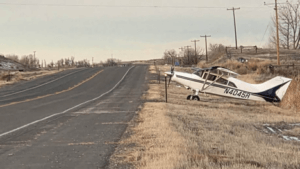 14, just outside Greybull, around 7:40 a.m. Monday. The Wyoming Highway Patrol (WHP) and Big Horn County Sheriff's Office responded to the scene and found the pilot unharmed and the plane undamaged.
The reason for the emergency landing? The aircraft had run out of fuel.
And the reason for the flight? Martin Mercer, the pilot, was flying from Hyattville to Greybull for a doctor's appointment.
"It was just a regular old medical appointment," said WHP spokesman Aaron Brown. "We got the plane off the road and worked traffic control to make sure no one ran into it."
Brown confirmed that Mercer made it into Greybull for his appointment. Once the aircraft, a fixed-wing single-engine Maule M-7-260C, was refueled, both lanes of U.S. 14 were temporarily blocked off so Mercer could take off and fly home to Hyattville.
"We didn't issue any citations because this was an emergency landing," Brown said. "Part of being a WHP trooper is taking care of people, and that's exactly what we did. It was pretty cut and dry."
The $100 Burger
Most people in the United States get to the doctor's office in a vehicle, whether it's their personal car, a bus, or a service like Uber or Lyft. If you have wings, why wouldn't you fly?
Longtime pilot and flight instructor Mitch Semel said people who own private aircraft are completely entitled to use their aircraft for whatever they'd like. In fact, it can be much more efficient.
"One of the great things about having your own plane is that you have the freedom and luxury to fly straight," he said. "I had a client in State College, Pennsylvania, which is a four-hour drive from the suburbs of New York, but only 30 to 40 minutes by plane."
Semel referenced "the $100 hamburger," a common term in aviation that refers to the benefits and costs of traveling by aircraft.
"It originated 50 years ago when pilots would look for any excuse to fly," he said. "The hamburger might have cost us $8 at the end of the day, but I would have spent $100 on the fuel flying there and back. But that was never the point. It was just the fun of doing it."
Today, people use personal aircraft for a variety of personal and professional reasons. Semel said the number of uses is "as varied as the number of owners."
In more remote states like Wyoming, using private aircraft is easier and can be more practical. Semel compared Wyoming to Alaska in that regard.
"Alaska has the highest proportion of certificated pilots per population, because there are a lot of places that are only accessible by plane or only practically accessible because it would be hours and hours of driving," he said. "It makes more sense in population-sparse areas.”
Doctors’ Distances
In Western states like Wyoming, doctors are also farther away than most states.
On average, it takes people in Wyoming and other mountain states an average of 13.7 minutes to travel to the nearest hospital, according to the Pew Research Center. Only two regions of the country have longer distances.
Just this year, Sublette County became the last Wyoming county to finally have a hospital of its own with the opening ofSublette County Hospital. Up until then, residents in the region had been driving 70 minutes or more for medical care.
On Air In The Air
When traveling in a road vehicle, anyone can get up and go without alerting anyone. Does the same apply to a private aircraft?
According to Semel, it depends on where you are. Wyoming pilots can freely fly between several communities without alerting anyone, although it's considered best practice to announce your flight plan somewhere.
"There are two things you can do," he said. "Pilots can file a VFR, meaning visual flight rules, that say they're planning to take off from Airport A and arrive at Airport B with the times of departure and arrival. The other way is called a flight following, where you talk to air traffic controllers all along the way."
The website FlightAware tracks the flight log of any aircraft flying in the U.S. Using that information, Semel determined that Mercer's aircraft often performs position-only flights, meaning it has radar surveillance equipment on board that can be detected by air traffic control systems.
Another determining factor for the freedom of flight is location. Semel said the United States' airspace was divided into different lettered sections in the 1980s, using letter grades to determine the rule and restrictions around the nation's busiest airspace.
"Class A is the highest airspace where commercial jets fly," he said. "The busiest airports in the busiest cities are Class B. Denver International Airport is Class B, and you need explicit permission to go through those."
Semel said most of Wyoming's airspace would fall under Class D, so pilots have mostly unrestricted freedom to fly, weather permitting.
You Can Do That?
Mercer was heading to the doctor after an incident with one of his cattle.
"I got run over by a cow and my wife had gotten me an appointment with (Dr. Brett) Ohman for my birthday, so that’s what I was doing,” he told the Greybull Standard. “The engine never did quit all the way, but it was sputtering pretty good. Good way to start a Monday."
Wyoming pilots occasionally make emergency landings on highways, and will sometimes take off from those highways after making repairs.
Because they're the safest option in what could be life-or-death circumstances. That's why Mercer wasn't cited for his emergency landing on U.S. 14.
"We don't encourage pilots to land on highways, but if you're running out of gas, you either land on the highway or you crash into the forest," Brown said. "Given the choice between the two, you're going to do what saves your life in the moment."
That doesn't mean it was an entirely happy landing. Mercer had to use his experience to get himself and the aircraft down in one piece.
"There was some traffic (from the west), with one lady coming over the hill, but when I met her, I was able to get over quite a ways so she could pass,” he told the Greybull Standard. “The worst part, there’s a power line right there going across the road. That could have been a little dicey.”
So, yes, anyone with a private aircraft in Wyoming can choose to fly into town for their groceries, business meetings, and medical appointments. It's at the discretion of the pilot.
"A lot of this comes down to weather conditions and visibility, but people can use their aircraft for all manner of reasons, personal and professional," Semel said. "I don't think I've heard of flying for a doctor's appointment, but that's not to say people don't do it."
Plane crashes in St. Clair County, 1 suffers minor injuries
By WBRC Digital Staff
PELL CITY, Ala. (WBRC) - The St. Clair County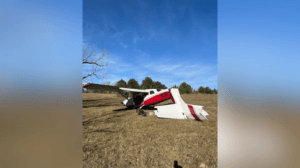 Sheriff’s Office responded to a plane crash in Pell City on Thursday afternoon, Dec. 11.
According to the sheriff’s office, the plane had to make an emergency landing after a loss of fuel, leading to a crash on Mountain Top Loop Road.
The sheriff’s office says the pilot was not injured. The passenger had minor injuries and was sent to UAB Hospital to be checked over. The Federal Aviation Administration is on scene.
https://www.wbrc.com/2025/12/11/plane-crashes-st-clair-county-1-suffers-minor-injuries/
NTSB Final Report: Cirrus Design Corp SF50
Pilot’s Inadvertent Use Of The Landing Gear Control Handle Instead Of The Flaps Selector Switch During The Landing Rollout
Location: Watsonville, California Accident Number: WPR24LA278
Date & Time: August 9, 2024, 17:50 Local Registration: N727VB
Aircraft: Cirrus Design Corp SF50 Aircraft Damage: Substantial
Defining Event: Landing gear collapse Injuries: 2 None
Flight Conducted Under: Part 91: General aviation - Business
Analysis: The pilot reported that during the landing roll, about the time that he was applying the brakes, the nose landing gear collapsed. Having no training on what to do in this scenario, he cycled the landing gear by raising then lowering the landing gear control handle. Postflight inspection revealed substantial to the undercarriage near the nose landing gear bay.
Stored onboard central maintenance computer (CMC) data showed that before touchdown the airplane was properly configured for landing with the flaps at 100%; the nose and both main landing gear were down and locked. After touchdown and during the landing roll, while both weight-on-wheels switches were temporarily unloaded, the landing gear handle was raised and then lowered, which unlocked the nose gear and allowed it to collapse. Additionally, both main landing gear became unlocked, but re-locked before they could collapse. After the nose gear collapse, the gear handle indicated an unexplained 4-second anomaly by indicating neither up nor down, then indicating down.
Postaccident examination and a landing gear swing test revealed no preaccident mechanical malfunctions or failures with the airplane that would have precluded normal operation. A missing nose landing gear locking spring from the nose gear assembly was not causal to the accident.
The flaps selector switch was located below the landing gear control handle. Further review of CMC data showed that the operators of the airplane often raise the flaps within seconds after touchdown, which was about the time that the nose landing gear collapsed. Although the pilot was familiar with the airplane and had accrued about 102 flight hours within the past 90 days, it is likely that the pilot inadvertently raised the landing gear control handle during the landing roll instead of selecting the flap selector switch to 0%.
Probable Cause and Findings: The National Transportation Safety Board determines the probable cause(s) of this accident to be -- The pilot’s inadvertent use of the landing gear control handle instead of the flaps selector switch during the landing rollout, which resulted in the collapse of the nose landing gear.
FMI: www.ntsb.gov
Today in History
40 Years ago today: On 12 December 1985 Arrow Air flight 1285R, a McDonnell Douglas DC-8-63CF, crashed immediately after takeoff from Gander Airport, Canada, killing all 256 occupants.
| Date: | Thursday 12 December 1985 |
| Time: | 06:46 |
| Type: | McDonnell Douglas DC-8-63CF |
| Owner/operator: | Arrow Air |
| Registration: | N950JW |
| MSN: | 46058/433 |
| Year of manufacture: | 1969 |
| Total airframe hrs: | 50861 hours |
| Engine model: | P&W JT3D-7 |
| Fatalities: | Fatalities: 256 / Occupants: 256 |
| Other fatalities: | 0 |
| Aircraft damage: | Destroyed, written off |
| Category: | Accident |
| Location: | 1 km SW of Gander Airport, NL (YQX) - Canada |
| Phase: | Initial climb |
| Nature: | Passenger - Non-Scheduled/charter/Air Taxi |
| Departure airport: | Gander Airport, NL (YQX/CYQX) |
| Destination airport: | Hopkinsville-Fort Campbell AAF, KY (HOP/KHOP) |
| Investigating agency: | CASB |
| Confidence Rating: | Accident investigation report completed and information captured |
Narrative:
Arrow Air flight 1285R, a McDonnell Douglas DC-8-63CF, crashed immediately after takeoff from Gander Airport, Canada, killing all 256 occupants.
On 11 December 1985 at 20:35 GMT, Arrow Air Flight MF1285R, a Douglas DC-8-63, departed Cairo, Egypt on an international charter flight to Fort Campbell, USA via Köln, Germany, and Gander. The flight had been chartered by the Multinational Force and Observers (MFO) to transport troops, their personal effects, and some military equipment to and from peacekeeping duties in the Sinai Desert. All 248 passengers were members of 101st Airborne Division (United States Army), based in Fort Campbell. The flight arrived at Köln at 01:21 were a complete crew change took place. The DC-8 departed for Gander at 02:50 GMT, where it arrived at 05:34 local time. Passengers were deplaned, the aircraft was refuelled, trash and waste water were removed, and catering supplies were boarded. The flight engineer conducted an external inspection of portions of the aircraft and the passengers then reboarded. Following engine start-up, the aircraft was taxied via taxiway "D" and runway 13 to runway 22 for departure. Takeoff on runway 22 was begun from the intersection of runway 13 at 06:45. The aircraft proceeded down the runway and rotated in the vicinity of taxiway "A", 51 seconds after brake release at an airspeed of about 167 KIAS. The aircraft gained little altitude after rotation, the speed reached 172 KIAS and began to decrease again, causing the DC-8 to descend. The airplane crossed the Trans-Canada Highway at a very low altitude. The pitch angle increased, but the aircraft continued to descend until it struck downsloping terrain approximately 3,000 feet beyond the departure end of the runway. The DC-8 broke up and burst into flames.
PROBABLE CAUSE: "The Canadian Aviation Safety Board was unable to determine the exact sequence of events which led to this accident. The Board believes, however, that the weight of evidence supports the conclusion that, shortly after lift-off, the aircraft experienced an increase in drag and reduction in lift which resulted in a stall at low altitude from which recovery was not possible. The most probable cause of the stall was determined to be ice contamination on the leading edge and upper surface of the wing. Other possible factors such as a loss of thrust from the number four engine and inappropriate take-off reference speeds may have compounded the effects of the contamination."
Four members of the CASB filed a dissenting opinion with a different probable cause: "An in-flight fire that may have resulted from detonations of undetermined origin brought about catastrophic system failures."
