We close out the week with these stories...
Have a safe weekend!
Tom
-
Barbour County plane crash under investigation by FAA
By Aaron Parker
UPDATE 6:16 p.m. –The Federal Aviation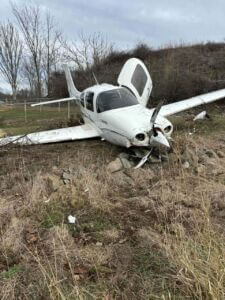 Administration has launched an investigation into the plane crash that occurred at the Philippi-Barbour County Regional Airport Thursday afternoon.
Initial reports say the brakes on the plane were reported to have failed which caused the plane to skid off the runway over a small embankment. The FAA learned that the plane, a Cirrus SR22, was traveling to Kentucky from New Jersey.
They said the pilot, who is from New Jersey, was the only one on board and suffered minor injuries.
BARBOUR COUNTY, W.Va. — Officials at the Barbour County 911 Center report an aircraft went down at the Philippi-Barbour County Regional Airport Thursday afternoon.
First responders were called to the scene at 12:34 p.m.
No information about injuries or the type of aircraft were provided.
The Philippi Fire Department and Philippi Police Department were on the scene as of 3:30 p.m.
https://wvmetronews.com/2026/01/08/barbour-county-plane-crash-under-investigation/
Search for plane crash victim moves from rescue to recovery
by Scott Lawrence
Sabine Pass — First responders tell KFDM they'll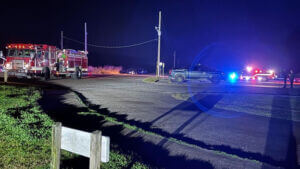 do whatever it takes to find a plane crash victim's body and bring closure to the family.
The search has turned from rescue to finding and recovering the victim's body.
The Jefferson County Sheriff's Office, Texas Parks and Wildlife, DPS and the Coast Guard, converging on the area north of Sea Rim State Park late Thursday afternoon in south Jefferson County.
The crash site is in Knight Lake just north of Highway 87
The FAA and National Transportation Safety Board were notified and en route to the area.
KFDM's Iman Abraham reported live on KFDM News at 10 and says darkness and tough conditions make the search challenging.
They're using air boats and drones to help.
Justice of the Peace Ben Collins Sr. tells KFDM he received a call to be on standby, but so far, he hasn't been notified of a recovery.
Capt. Ryan Hall with Parks and Wildlife says they'll continue looking Thursday night for as long as they can and resume in the morning. The goal is to get answers and bring closure to the victim's family.
The plane is a 1993 Beechcraft A36 Bonanza based in Jennings, Louisiana.
That plane described as a high-performance, single-engine, six-seat general aviation airplane known for its speed, comfort, and build quality.
According to "Flight Radar 24" the plane left Thibodaux, Louisiana this morning for Jennings.
The plane took off from the Jennings airport at 1:52 this afternoon and was bound for Galveston Scholes International Airport in Galveston County.
It crashed at 3:04 p-m. Flight Radar 24 tracking the plane's final moves. This is when it crosses from Louisiana into Texas, over the ship channel, still maintaining 6,000 foot altitude,
The plane turns and then loses altitude, crashing between Salt Lake and Knight Lake, prompting the emergency response and large-scale effort to find and recover the victim's body.
https://kfdm.com/news/local/breaking-plane-crash-north-of-sabine-pass
NTSB Prelim: Bell Textron Canada Ltd 505
Shortly After Takeoff, A Loud “Bang” Was Heard In An Area Above (Pilot's) Head
Location: Divot, TX Accident Number: CEN26LA061
Date & Time: December 13, 2025, 13:45 Local Registration: N865S
Aircraft: Bell Textron Canada Ltd 505 Injuries: 1 Serious, 1 Minor
Flight Conducted Under: Part 91: General aviation - Personal
On December 13, 2025, about 1345 central standard time, a Bell Helicopter 505, N865S, was substantially damaged when it was involved in an accident near Divot, Texas. The pilot was seriously injured and the passenger sustained minor injuries. The helicopter was operated as a Code of Federal Regulations Part 91 personal flight.
According to the pilot, shortly after takeoff, a loud “bang” was heard in an area above his head. He experienced a partial loss of control as the cyclic began to shake, and the helicopter began to pitch uncommanded. During the loss of control, the helicopter was over a pond, so he maneuvered back over land for a forced landing. During the forced landing and contact with terrain, the helicopter rolled onto its left side sustained substantial damage to the main rotor system.
The helicopter was retained for further examination.
FMI: www.ntsb.gov

Today in History
15 Years ago today: On 9 January 2011 Iran Air flight 277, a Boeing 727, crashed while on approach to Urmia, Iran , killing 78 occupants; 27 survived the accident.
| Date: | Sunday 9 January 2011 |
| Time: | 19:31 |
| Type: | Boeing 727-286 |
| Owner/operator: | Iran Air |
| Registration: | EP-IRP |
| MSN: | 20945/1048 |
| Year of manufacture: | 1974 |
| Total airframe hrs: | 9019 hours |
| Engine model: | P&W JT8D-15 |
| Fatalities: | Fatalities: 78 / Occupants: 105 |
| Other fatalities: | 0 |
| Aircraft damage: | Destroyed, written off |
| Category: | Accident |
| Location: | 15 km SE of Urmia (Orumiyeh) Airport (OMH) - Iran |
| Phase: | Approach |
| Nature: | Passenger - Scheduled |
| Departure airport: | Tehran-Mehrabad Airport (THR/OIII) |
| Destination airport: | Urmia (Orumiyeh) Airport (OMH/OITR) |
| Confidence Rating: | Accident investigation report completed and information captured |
Narrative:
Iran Air flight 277, a Boeing 727, crashed while on approach to Urmia, Iran , killing 78 occupants; 27 survived the accident.
Flight IR277 took off from Tehran-Mehrabad Airport at 18:33 local time (15:03 UTC) and continued its route via UL125 and G781 towards Urmia. At 15:37 UTC, after coordinating with Tehran Control Center for an approach to Urmia Airport, the aircraft began to descend and at 15:42 UTC contacted the Urmia Tower and was cleared for the TUBAR2A procedure and a VOR/DME/ILS approach to runway 21.
Weather at the airport was poor with a visibility of about 800 m in heavy snow.
During the execution of the approach procedure to land at Urmia Airport, the aircraft's stick shaker (stall warning) was activated due to the low speed in relation to the flap settings. The problem was resolved after corrective action was taken.
At 15:54:49 UTC, the Urmia Tower controller requested the position of flight IR277 three times. Then, the flight reported its position as being 5 miles away. The Urmia Tower controller then inquired if the aircraft was established on the ILS, to which the flight responded negatively.
The Urmia Tower controller then asked the flight if it intended to continue its approach for landing. In response, flight IR277 reported that it had abandoned the approach and was performing a missed approach. The controller then requested that the flight rejoin the IAF (Initial Approach Fix) for runway 21, and flight IR277 confirmed this.
After the missed approach at 16:00:41 UTC, despite being at an altitude of 8,768 feet, with a pitch-up angle of 8.1 degrees and a left bank angle of 26 degrees, the aircraft, with a speed of 170 knots (within the operational limit) and flaps set at 50 degrees, experienced a second stick shaker activation and a decrease in altitude, indicating the aircraft was approaching the stall speed threshold.
This possibly occurred due to a aerodynamic change in the aircraft, potentially due to ice formation on parts of the aircraft, such as the tail section, which lacks an anti-ice system, which led to an increase in stall speed.
The engine pressure ratio (EPR) of all three engines increased from (1.30 - 1.25 - 1.36) to (1.46 - 1.48 - 1.53) and then decreased over four seconds to (1.05 - 1.07 - 1.06). This could have been caused by disturbed airflow entering the engines, combined with the increase in bank angle from 26 to 40 degrees to the left, likely due to the stall.
To recover from the stall, at 16:00:50 UTC, the pilot instructed for maximum power to be applied to all three engines. Initially, engine 3 reached an EPR of 2.14 at 16:00:53 UTC. However, due to disturbed airflow entering the engine, the EPR dropped, leading to engine failure. Five seconds later, engine 1 also failed in a similar manner.
At 16:00:53 UTC, the Urmia Tower controller asked for the position of flight IR277 again. The flight responded with "Standby." The tower controller then asked for the flight's intentions, and the response was that they were abandoning the approach. Due to intermittent radio communication, the tower controller requested a repetition of the last transmission. Flight IR277 then stated, "We are going to Tehran."
At 16:01:07 UTC, the pilot ordered maximum engine power. Only engine 2 responded, reaching an EPR of 2.11.
The flaps were then retracted, leading to a quicker loss of altitude.
At 16:01:08 UTC, in a radial of 150 degrees from the VOR and at a distance of 30 kilometers from the airport, near the villages of Meshkabad Olya and Hasanlu, the aircraft impacted terrain and broke up.
Main Cause of the Accident:
The main cause of the accident was the unfavorable and abnormal conditions experienced by the aircraft, combined with inadequate handling by the cockpit crew in response to the emerging situation.
Contributing Factors:
- The outdated technology of the aircraft's systems.
- The lack of a suitable simulator for adverse weather conditions.
- Failure to properly follow operational procedures by the flight crew.
- Inadequate cockpit management (CRM).
METAR:
16:00 UTC / 19:30 local time:
OITR 091600Z 26004KT 0800 SN SCT015 SCT020 OVC060 00/00 Q1016=
Wind 260 degrees at 4 knots; Visibility 800 m in snow; scattered clouds 1,500 ft; scattered clouds 2,000 ft.; overcast 6,000 ft.; Temperature 0°C; Dew point 0°C; 1016 hPa
