We start the new week with these stories...
Be safe out there!
Tom
-
Private plane carrying 8 passengers crashes in Bangor, Maine, as Winter Storm Fern batters state
By Zoe Hussain
A private jet carrying eight people crashed as it was taking off from a Maine airport amid heavy snowfall in the region Sunday evening, according to authorities.
The Bombardier Challenger 600 crashed just after taking off from Bangor International Airport around 7:45 p.m, the Federal Aviation Administration said in a statement to The Post.
The extent of passengers’ injuries is not immediately clear.
Emergency crews responded to the crash. The airport is now closed as first responders assess the wreck.
“An incident at the airport is under investigation. First responders are on the scene assessing the situation. Please avoid the airport,” Bangor International Airport posted to social media.
The plane that crashed is registered to a limited liability corporation in Houston, CNN reported.
Maine is currently experiencing below-freezing temperatures and snowfall amid a powerful winter storm that battered much of the Northeast on Sunday. The FAA and NTSB will investigate the incident.
https://nypost.com/2026/01/25/us-news/private-plane-carrying-8-passengers-crashes-in-bangor-maine/
PLANE LANDS IN FARM FIELD NEAR SIOUX GATEWAY AIRPORT (Update)
By Woody Gottburg
THE NATIONAL TRANSPORTATION SAFETY BOARD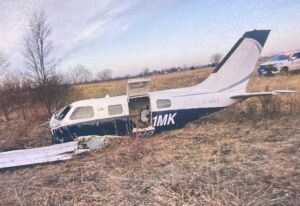 IS INVESTIGATING WHAT CAUSED A SMALL PLANE THAT HAD JUST TAKEN OFF FROM SIOUX GATEWAY AIRPORT SATURDAY MORNING TO ABRUPTLY LAND IN A FIELD A HALF MILE SOUTH OF THE AIRPORT.
THE SINGLE-ENGINE PRIVATE AIRCRAFT DEPARTED SIOUX GATEWAY AT 7:14 A.M. AND ATTEMPTED TO RETURN SHORTLY AFTER TAKEOFF, BUT LANDED SAFELY IN THE FIELD.
SIOUX CITY POLICE SAY TWO OCCUPANTS WERE ON BOARD AND WERE WALKING OUTSIDE OF THE PLANE WHEN FIRST RESPONDERS ARRIVED.
THE TWO INDIVIDUALS DECLINED MEDICAL TREATMENT AT THE SCENE.
THE NTSB HAS RELEASED THE AIRCRAFT FROM THE LANDING SITE TO BE TOWED BACK TO SIOUX GATEWAY AIRPORT AND SECURED FOR FOLLOW-UP INVESTIGATION.
Updated 12:45pm 1/24/26
————————————————-
AUTHORITIES ARE INVESTIGATING A SMALL PLANE THAT LANDED IN A FIELD NEAR 225TH STREET A HALF MILE SOUTH OF SIOUX GATEWAY AIRPORT SATURDAY MORNING.
SIOUX CITY POLICE SAY TWO OCCUPANTS WERE ON BOARD, AND WERE REPORTEDLY WALKING OUTSIDE OF THE PLANE WHEN FIRST RESPONDERS ARRIVED.
THERE’S NO WORD OF INJURIES AND WHAT CAUSED THE PLANE TO GO DOWN INTO THE FIELD HAS NOT BEEN DETERMINED AT THIS TIME.
PLANE LANDS IN FARM FIELD NEAR SIOUX GATEWAY AIRPORT (Update)
Operations resume at Miami International Airport after "suspicious item" left at terminal prompts evacuations, authorities say
By Hunter Geisel
Miami International Airport was evacuated after a "suspicious item" was left at the terminal on Sunday evening, authorities said.
Shortly after 5 p.m., the Miami-Dade Sheriff's Office responded to MIA regarding a report of unattended luggage at Door 21 of the South Terminal on the Departures level of the airport.
Upon arrival, deputies identified the luggage and, out of an abundance of precaution, proceeded to evacuate everyone in the area, MDSO told CBS News Miami.
MIA Spokesperson Greg Chin confirmed the incident with CBS News Miami, saying that the TSA checkpoints for Concourses G, H and J, along with the curbside roadway, have been evacuated and closed off, causing traffic in the area.
Chin added that passengers driving to MIA should give themselves additional time as MDSO's Bomb Squad was brought to the scene and is investigating the situation. MDSO said in a later update that the Bomb Squad gave the all-clear around 7:40 p.m. and that the airport has resumed normal operations.
CBS News Miami has a crew heading to the airport to gather more details as authorities continue their investigation.
https://www.cbsnews.com/miami/news/miami-international-airport-evacuations-suspicious-item-luggage/
NTSB Final Report: Piper PA-28-140
Flight Instructor Detected A Vibration; Shortly Thereafter He Heard A Loud Bang, The Engine Lost Total Power
Location: Royal Kunia, Hawaii Accident Number: ANC25LA028
Date & Time: March 27, 2025, 12:00 Local Registration: N261FC
Aircraft: Piper PA-28-140 Aircraft Damage: Substantial
Defining Event: Part(s) separation from AC Injuries: 2 Minor
Flight Conducted Under: Part 91: General aviation - Instructional
Analysis: During an instructional flight, the flight instructor detected a vibration; shortly thereafter he heard a loud bang, the engine lost total power, and the nose dropped. He performed a forced landing to a heavily vegetated field.
After landing, the flight instructor noticed that the propeller was missing. It was later found in a nearby residence; no one was injured. The airplane sustained substantial damage to both wings, the fuselage, and the empennage.
Examination of the separated propeller revealed that the engine crankshaft had fractured and separated just aft of the crankshaft propeller flange (CPF). This flange is an integral part of the crankshaft and is where the propeller attaches to the engine; however, the CPF was found attached to the separated propeller and not the crankshaft where it belonged. The CPF was removed from the propeller and examined by an NTSB metallurgist to determine why the crankshaft had fractured and separated. The examination revealed that the CPF had been improperly modified by the drilling and installation of additional bolts. Investigators were unable to determine the purpose for the modification, when it was made, or by whom.
Available maintenance records did not include any entries noting that the propeller assembly had been removed or altered since initial installation. Additionally, there are no Lycoming maintenance instructions, repair instructions, or service bulletins that permit hole drilling and filling of the CPF.
Probable Cause and Findings: The National Transportation Safety Board determines the probable cause(s) of this accident to be -- Improper alteration of the crankshaft propeller flange at an unknown time, which resulted in an in-flight separation of the propeller assembly.
FMI: www.ntsb.gov
NTSB Prelim: Evektor - Aerotechnik A S Sportstar Max
Without Warning, The Airplane Began Vibrating Violently And The Control Sticks Moved Rapidly To Their Forward And Aft Limits Several
Location: Needles, CA Accident Number: WPR26LA073
Date & Time: December 27, 2025, 11:09 Local Registration: N2312T
Aircraft: Evektor - Aerotechnik A S Sportstar Max Injuries: 2 None
Flight Conducted Under: Part 91: General aviation - Personal
On December 27, 2025, about 1109 Pacific standard time, an Evektor-Aerotechnik AS Sportstar Max LSA airplane, N2312T, was substantially damaged when it was involved in an accident near Needles, California. The pilot and pilot rated passenger were not injured. The airplane was operated as a Title 14 Code of Federal Regulations Part 91 personal flight.
The pilot reported that while operating in cruise flight about 6,500 ft mean sea level (msl) to Lake Havasu City Airport (HII), Lake Havasu City, Arizona, all flight instruments and engine parameters were within normal operating ranges. Without warning, the airplane began vibrating violently and the control sticks moved rapidly to their forward and aft limits several.
The engine RPM decreased, the vibrations simultaneously subsided and after about 15 seconds the pilot regained the ability to manipulate the control stick. The passenger observed that one of the three propeller blades had departed the propeller hub, and the pilot initiated a forced landing on runway 02 at Needles Airport (EED), Needles, California.
Post-flight inspection of the engine revealed substantial damage to the upper left engine mount which separated from the firewall. The propeller hub was fracture-separated at the blade grip. The blade grip material and the four blade retention bolts were liberated from the hub.
The airplane was recovered to a secure area for further examination.
FMI: www.ntsb.gov
NTSB Prelim: Mark Strout Zenair Zodiac 601HDS
There Were “No Abnormal Noises, Vibrations Or Power Deviations” Prior To The Loss Of Engine Power
Location: Connerton, FL Accident Number: ERA25LA327
Date & Time: September 1, 2025, 16:05 Local Registration: N680LM
Aircraft: Mark Strout Zenair Zodiac 601HDS Injuries: 2 Minor
Flight Conducted Under: Part 91: General aviation - Personal
On September 01, 2025 about 1605 eastern standard time, an experimental amateur-built Zenith Zodiac 601 HDS, N680LM, was substantially damaged when it was involved in an accident near Connerton, Florida. The pilot and the passenger received minor injuries. The airplane was operated as a Title 14 Code of Federal Regulations Part 91 personal flight.
The pilot reported that he planned to provide rides to four relatives, each on a separate 15-minute flight with a departure from and return to Pilot Country Airport (X05), Brooksville, Florida. In preparation for these flights, the pilot purchased 3 gallons of 89 octane automotive fuel. After he added the fuel, he estimated the airplane's total fuel to be 9.8 gallons prior to the first flight. Before the passengers arrived, the pilot performed a preflight inspection of the airplane and did not notice any abnormalities. On the first two flights, the pilot noted normal engine performance, including normal temperature and pressure readings. The first flight’s duration was 16 minutes, while the second was 12 minutes.
The pilot estimated that the total fuel onboard for the accident flight was 6 to 7 gallons. The pilot stated that the airplane’s cruise fuel consumption was 3.8 to 4.0 gallons per hour (gph), and that the 4 gallons of fuel was sufficient for the upcoming 15-minute flight. The pilot departed on the third flight at 1601. He did not notice anything abnormal during the ground roll or with the initial climb rate. About 420 ft above ground level (agl), the pilot reported “the engine suddenly stopped without any warning.” He further explained there were “no abnormal noises, vibrations or power deviations” prior to the loss of engine power.
He then adjusted the airplane’s pitch attitude for best glide speed, turned into the wind and prepared for an off-field landing. The pilot attempted to restart the engine twice but was unsuccessful, though he did note that the starter was functioning during these attempts. He then performed a forced landing in a nearby field. During the landing sequence, the airplane nosed over and came to rest inverted. The pilot was able to self-extricate, then helped his passenger through the airplane’s shattered canopy.
A Federal Aviation Administration Inspector examined the wreckage at the scene of the accident and observed substantial damage to both wings, the fuselage and rudder of the airplane. Fuel was found in both wing tanks and the fuselage-mounted tank. The header tank was not examined.
The wreckage was recovered and retained for further examination.
FMI: www.ntsb.gov

Today in History
52 Years ago today: On 26 January 1974 THY flight 301, a Fokker F-28 Fellowship, crashed following a loss of control on takeoff from Izmir-Cumaovasi Airport, Türkiye, killing 66 occupants; 7 survived the accident.
| Date: | Saturday 26 January 1974 |
| Time: | 07:10 |
| Type: | Fokker F-28 Fellowship 1000 |
| Owner/operator: | Türk Hava Yollari - THY |
| Registration: | TC-JAO |
| MSN: | 11057 |
| Year of manufacture: | 1972 |
| Total airframe hrs: | 2269 hours |
| Cycles: | 3133 flights |
| Fatalities: | Fatalities: 66 / Occupants: 73 |
| Other fatalities: | 0 |
| Aircraft damage: | Destroyed, written off |
| Category: | Accident |
| Location: | Izmir-Cumaovasi Airport (ADB) - Türkiye |
| Phase: | Take off |
| Nature: | Passenger - Scheduled |
| Departure airport: | Izmir-Cumaovasi Airport (IZM) |
| Destination airport: | Istanbul-Yesilköy Airport (IST/LTBA) |
| Confidence Rating: | Accident investigation report completed and information captured |
Narrative:
THY flight 301, a Fokker F-28 Fellowship, crashed following a loss of control on takeoff from Izmir-Cumaovasi Airport, Türkiye, killing 66 occupants; 7 survived the accident.
The Fokker aircraft became airborne after a ground run on runway 35 of approx. 3200 feet. At a height of 8-10 m the aircraft suddenly yawed left and pitched nose-down. The aircraft contacted the ground again and struck a drainage ditch, skidded, disintegrated and caught fire.
With the conditions at the time of takeoff, the aircraft should have reached rotation speed after a ground roll of 850 m(2800 feet). From the flight data recorder it was determined that the aircraft became airborne at 124 knots after a 975 m (3200-foot) roll . The speed increased to 133 knots and then dropped to 124 knots, and the aircraft veered left.
PROBABLE CAUSE: "The aircraft stalled on takeoff due to over rotation and frost accretion on the wings."
