We start off the new week with the following stories...
Be safe out there!
Tom
-
2 people critically injured in small plane crash in Ventura County
by: Josh DuBose
Two people were rushed to the hospital with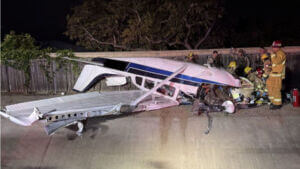 serious injuries after a small, single-engine plane crash Sunday in Ventura County, officials confirmed to KTLA.
First responders with the Ventura County Fire and Sheriff’s departments responded to reports of the crash in a drainage ditch near Carmen Drive and Lucero Street in Camarillo just after 6 p.m.
“Firefighters successfully extricated two patients from the aircraft,” sheriff’s officials said in a post to X. “Both were transported with severe injuries in critical condition to a local hospital.”
Ventura County Fire Division Chief Nick Cleary said emergency dispatch was notified at 6:05 p.m. that the aircraft was having engine trouble and was attempting to return to the airport when the crash occurred.
“About five minutes later the aircraft was reported down here at Carmen,” he said. “We redirected resources to this location and located the plane in the drainage that parallels Carmen.”
In footage of the crash aftermath obtained by KTLA, a heavy fire department presence was seen while the aircraft lay upside down with visible damage to several different areas of the plane. There was also at least part of the plane that was in nearby trees.
No other structures were struck during the crash,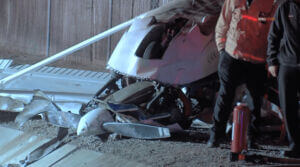 which appears to have occurred very close to a residential neighborhood.
Authorities have yet to identify the two victims, nor did they provide any age or gender information.
Investigators said that officials with the Federal Aviation Administration have been notified of the crash. KTLA has reached out to the agency for comment and is waiting to hear back.
Firefighters were expected to remain at the scene to clean any hazardous materials that may have been left from the damaged plane.
https://ktla.com/news/ventura-count/2-people-critically-injured-in-small-plane-crash-in-ventura-county/
Panic at Antalya Airport! The plane's landing gear broke, and its engine scraped the runway.
Haberler.com
A passenger plane's landing gear broke during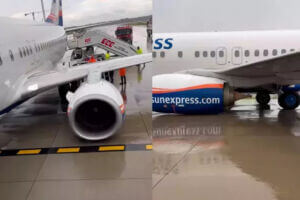 takeoff from Antalya Airport. The wing was punctured, and the aircraft tilted to the left, its jet engine scraping the runway. No one was injured on board the plane, which was carrying 175 passengers and 6 crew members, but passengers experienced considerable panic. SunExpress released a statement saying, "Passengers were safely disembarked from the aircraft, and the plane has been taken in for technical inspection."
- A SunExpress aircraft departing from Antalya Airport to Gaziantep experienced a technical malfunction in its landing gear strut.
- The plane was carrying 175 passengers and 6 crew members, and there were no fatalities or serious injuries in the incident.
- The aircraft has been taken in for technical inspection, and the Antalya-Gaziantep flight will be operated with a different aircraft.
A passenger plane preparing for takeoff from Antalya Airport experienced a serious technical malfunction during takeoff. The landing gear of the plane, which was heading to Gaziantep, broke, the wing section was damaged, and the aircraft tilted to the left. The plane was able to stop after its jet engine scraped the runway.
NO ONE WAS INJURED.
A potential disaster was averted thanks to the swift response of the captain, cabin crew, and ground crew during the incident. All 175 passengers and 6 crew members on board were evacuated, and it was reported that there were no fatalities or serious injuries.
"WE ESCAPED A MAJOR DISASTER."
One of the passengers who experienced the incident said, "God protected us from a much greater disaster. However, I call on all authorities to take action regarding the maintenance of existing aircraft."
"THE AIRCRAFT HAS BEEN TAKEN FOR TECHNICAL INSPECTION."
SunExpress released a statement saying, "A technical malfunction occurred in the landing gear strut of SunExpress aircraft flight XQ7646, which was preparing to depart for Antalya–Gaziantep. Passengers were safely disembarked from the aircraft, and the aircraft has been taken for technical inspection. The Antalya-Gaziantep flight will be operated with a different aircraft."
https://www.haberler.com/guncel/antalya-havalimani-ndan-kalkisa-hazirlanan-ucagin-19564311-haberi/
Small plane crashes into neighborhood near Poplar Grove, Illinois, NTSB says
Crash damages gas lines, forcing evacuation for some residents, local fire officials say
By Maher and ABC7 Chicago Digital Team
POPLAR GROVE, Ill. (WLS) -- A small plane crashed into a residential neighborhood Saturday in Boone County, National Transportation Safety Board officials said.
One person was onboard the plane, local fire officials said.
The crash happened around 4 p.m. on Springmeadow Drive in Poplar Grove, Illinois, village officials said. The village is about 80 miles northwest of Chicago.
The exact circumstances of the were not yet known. A Whittman Tailwind airplane was involved in the crash, the NTSB said.
The plane had one occupant, but the extent of their injuries are not clear at this time, Boone County Fire Protection District #2 officials said.
Residents were shocked to hear and see the collision right near their homes.
"I just heard a noise and a loud bang, and I just saw a whole bunch of people running," resident Jayden Gallegos said. "My heart was beating pretty fast, and I didn't know what to really do."
The crash caused some damage to a fence as well as some gas lines, forcing the evacuation of some people in the neighborhood.
"Out of an abundance of caution nearby residents were evacuated due to the active natural gas link," local fire official Joseph Prokop said. "The scene remains active and we ask the public to kindly avoid the area.
The Federal Aviation Administration, the NTSB and the Boone County Sheriff's Department are investigating, officials said.
Small plane lands on southbound lanes of Legacy Parkway in Davis County
by Jonathan May, KUTV
BOUNTIFUL, Utah (KUTV) — A small plane landed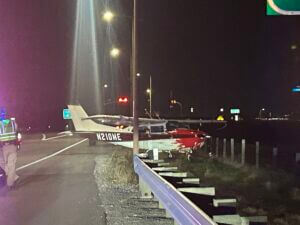 on the southbound lanes of Legacy Parkway near the 500 South interchange in Davis County.
Four people were on board, according to a Utah Highway Patrol spokesperson, and there were no reported injuries.
The right lane near the exit was blocked and was expected to be cleared by 8:45 p.m.
Utah Highway Patrol Cpl. Jared Heywood said the pilot successfully made an emergency landing on Legacy Parkway. He added the aircraft came from nearby Skypark Airport and had engine trouble.
https://kutv.com/news/local/small-plane-lands-on-southbound-lanes-of-legacy-parkway-in-davis-county
Utah pilot, passenger make emergency landing on Salt Flats near Wendover
By Gephardt Daily Staff
WENDOVER, Utah, Feb. 15, 2026 (Gephardt Daily)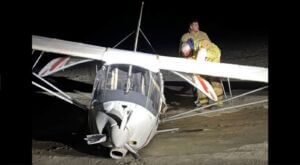 — A Utah pilot and his male passenger, both from Utah, made an emergency landing on the Bonneville Salt Flats Sunday evening after an engine malfunction.
The incident happened at about 6:20 p.m. approximately 7 miles northeast of Wendover. The Wendover Fire Department responded to the scene and found the two-seat, single-engine aircraft.
According to a WFD statement, “Both occupants of the aircraft, two adult male passengers from Utah, were uninjured and were able to walk away from the incident without assistance. No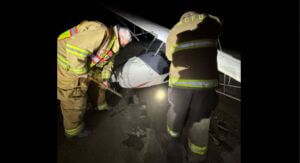 additional injuries have been reported at this time.”
“Upon arrival, fire personnel secured the scene and successfully stopped a fuel leak from the aircraft, mitigating any immediate environmental or fire hazards,” the statement says.
The Wendover Police Department and officers from the Bureau of Land Management are investigating the malfunction and the subsequent emergency landing, the WFD statement says.
Utah pilot, passenger make emergency landing on Salt Flats near Wendover
Nelson Search and Rescue and the Royal Canadian Air Force team up to rescue 2 after helicopter crash
Casey Richardson
A combined effort from Nelson Search and Rescue, the Royal Canadian Air Force, and a local tour operator helped two people get to medical care after a helicopter crash on Friday morning.
Public Affairs Officer Lieutenant Keil Kodama said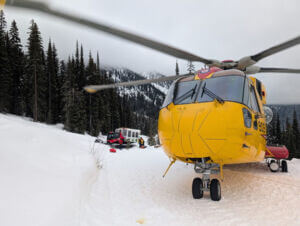 RCAF crews from 19 Wing Comox were called to help in a crash at approximately 8:05 a.m. near Mount Kubin.
Using their CH-149 Cormorant helicopter and a CC-295 Kingfisher aircraft, they joined a local Nelson helicopter operator in responding to the scene.
"Due to low cloud and reduced visibility at the crash site, the Cormorant crew was initially unable to directly access the patients," Kodama said in the news release.
Nelson Search and Rescue worked alongside a local tour operator to get the two injured parties down via toboggan to a lower elevation, so CH-149 Cormorant could safely land and transport them to the hospital.
“One of the biggest challenges was the weather and cloud cover around the crash site,” said Capt. Matt Welsh, Aircraft Commander on the CH-149 Cormorant. “Thanks to the exceptional coordination between air and ground crews, the patients were safely brought to us so we could complete the evacuation.”
One patient was evacuated to Kelowna for further care, while Nelson SAR crews took the second patient to the local airport to hand over to BCEHS.
"This was a great collaboration between civil, military and commercial agencies, and we are very happy to have helped coordinate and facilitate a positive outcome for the subject's onward care," NSAR Manager Anna Wynne said.
The RCAF works closely with federal, provincial, and local partners to provide search and rescue coverage across Canada, 24 hours a day, 365 days a year.
https://www.castanet.net/news/Nelson/599256/Nelson-Search-and-Rescue-and-the-Royal-Canadian-Air-Force-team-up-to-rescue-2-after-helicopter-crash
Coroner IDs four victims in fatal Steamboat Springs plane crash
Father and son among victims
By: Robert Garrison
STEAMBOAT SPRINGS, Colo. — Authorities identified the four people who died after the plane they were in crashed into the side of a mountain near Steamboat Springs early Friday morning.
As first reported by Steamboat Radio, the victims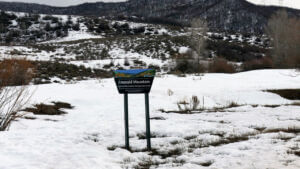 were identified by the Routt County Coroner’s Office as 47-year-old Aaron Stokes, and his son, according to Steamboat Radio, 21-year-old Jakson Stokes; 21-year-old Colin Stokes, and 37-year-old Austin Huskey were also killed in the 12:20 a.m. single-engine turboprop crash on Emerald Mountain.
According to tracking data, the Epic Aircraft E1000 — registered to ALS Aviation in Tennessee — had departed Kansas City Downtown Airport around 10 p.m. (MDT) and was approaching Bob Adams Airport in Steamboat Springs when it crashed into Emerald Mountain southeast of the airport, killing everyone onboard.
The victims’ bodies have been recovered from the scene, according to the Routt County Sheriff’s Office.
The National Transportation Safety Board is investigating the cause of the crash.
According to Scripps News, Aaron Stokes was known in the automotive repair industry as the founder of Shop Fix Academy and host of the radio show “Fixin’ Cars with Aaron Stokes.” He was described as a mentor and entrepreneur who worked closely with independent shop owners.
Austin Huskey was the CEO and third-generation owner of Huskey Truss & Building Supply, a family-owned company based in Tennessee.
Colorado’s independent auto repair community is mourning the loss of Aaron Stokes.
"The Colorado automotive community feels this loss profoundly. While his time with us was far too short, his legacy is enduring. The standards he set, the accountability he modeled, and the encouragement he offered will continue to shape our businesses and our lives," CEO of Straightaway Tire and Auto Brian Bates said in a statement.
https://www.denver7.com/news/local-news/coroner-ids-four-victims-in-fatal-steamboat-springs-plane-crash
NTSB Releases Docket Report On Bering Air Crash Investigation
Operational Factors Report Shows Pattern Of Overweight Flights
The National Transportation Safety Board (NTB) has released a 3,000-page docket report on the Bering Air Flight 445 that crashed into sea ice on Feb. 6, 2025, killing all 10 people aboard.
The NTSB release includes 78 files containing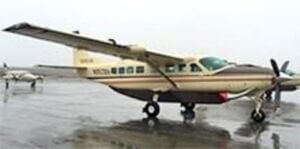 audio, photographs, weather data and information about conditions at Nome airport on the day of the crash. Clint Johnson, NTSB Alaska regional office chief, said the agency continues working to determine the probable cause of the crash. “We do our job, but obviously this one hit pretty close to home for everybody,” Johnson said. All 10 people killed in the crash were Alaskans.
Johnson said the release of thousands of documents does not mean investigators have reached a final conclusion about what caused the crash. A final report is expected early this summer, he said. “I can almost guarantee that there will be some recommendations that come out of this accident report,” Johnson said. “But we’re not at that juncture where we’re able to release those at this point.” Johnson said Bering Air has already made operational changes following the tragedy. “We’ve been working very closely with Bering Air. This obviously was a devastating accident for them.”
The NTSB Group Chair’s Operational Factors report reveals investigators’ concerns about weight limits, de-icing system use and extreme icing conditions. The Cessna 208B operated by Bering Air, Inc. was descending into Nome Airport from Unalakleet when it experienced rapid descent, decreased airspeed and a loss of radar contact at approximately 3:20 p.m. The aircraft was found about 34 miles southeast of its intended destination on sea ice.
The pilot, a 34-year-old based in Nome with approximately 2,500 total flight hours, successfully activated the plane’s de-icing system after reporting freezing “drizzle,” both to dispatch personnel and to communicate with other aircraft about severe icing conditions. Other pilots in the area reported unprecedented icing accumulations, with one describing ice buildup as “incredibly spiky” and as thick as an inch and a half on surfaces not protected by the aircraft’s anti-icing system.
FMI: www.ntsb.gov
NTSB Final Report: Cirrus Design Corp SR22
Pilot Reported The Airplane’s Braking Was Ineffective Due To The Runway Being Wet And Recently Rolled
Location: Nora Springs, Iowa Accident Number: CEN25LA351
Date & Time: August 27, 2025, 20:55 Local Registration: N45JN
Aircraft: Cirrus Design Corp SR22 Aircraft Damage: Substantial
Defining Event: Runway excursion Injuries: 4 None
Flight Conducted Under: Part 91: General aviation - Personal
Analysis: The pilot reported that while landing on a wet grass runway, the airplane touched down “a little long.” The pilot was unable to stop the airplane, and it departed the end of the runway surface into an agricultural field. He then attempted to avoid the agricultural vegetation off the end of the runway by turning the airplane to the left; however, the airplane entered a skid and subsequently impacted the vegetation which resulted in substantial damage to the fuselage.
The pilot reported the airplane’s braking was ineffective due to the runway being wet and recently rolled. The pilot reported that there were no preaccident mechanical failures or malfunctions with the airplane that would have precluded normal operation. At the time of the accident, the pilot was landing the airplane on runway 09 with wind from 230° at 6 knots. The calculated total landing distance required from the landing distance performance chart was 3,943 ft, which was 1,493 ft more than the available runway distance.
Probable Cause and Findings: The National Transportation Safety Board determines the probable cause(s) of this accident to be -- The pilot’s improper decision-making for the attempted landing, which resulted in a runway overrun due to inadequate runway landing distance with a quartering tailwind. Contributing to the accident was the wet condition of the runway.
FMI: www.ntsb.gov
NTSB Final Report: Burkhart Grob Flugzeugbau G102 Astir CS
As The Glider Approached The Plowed Field, He Applied Left Rudder And Inadvertently Lowered The Left Wing
Location: Wallis, Texas Accident Number: CEN26LA018
Date & Time: October 11, 2025, 16:17 Local Registration: N137SS
Aircraft: Burkhart Grob Flugzeugbau G102 Astir CS Aircraft Damage: Substantial
Defining Event: Loss of control on ground Injuries: 1 None
Flight Conducted Under: Part 91: General aviation - Personal
Analysis: The pilot stated that he intended to land long on the runway and stop at the north end of airport, between a plowed field and a hangar. He stated that there was a right crosswind, which was within the maximum crosswind capability of the glider. During landing and about 10 feet or less above the runway, the pilot closed the air brakes and allowed ground effect to enable the glider to reach the planned touchdown point. During landing rollout, he made use of minimal speed brakes to keep the glider rolling. As the glider approached the plowed field, he applied left rudder and inadvertently lowered the left wing. Within a few seconds, the glider made a sharp left turn, which the pilot could not remediate with corrective control input. The glider sustained substantial damage to the left and right wings. There were no mechanical anomalies with the glider that would have precluded normal operation.
The pilot stated that the accident could have been prevented by keeping the wings level during landing rollout and by not extending the ground roll into area of the plowed field and hangar.
Probable Cause and Findings: The National Transportation Safety Board determines the probable cause(s) of this accident to be -- The pilot’s failure to maintain control during landing roll that resulted in an impact with terrain.
FMI: www.ntsb.gov
NTSB Final Report: Harmon Rocket II
Pilot’s Loss Of Control On The Landing Roll, Which Led To The Airplane Coming To Rest Inverted
Location: Mesquite, Nevada Accident Number: WPR24LA075
Date & Time: January 12, 2024, 15:15 Local Registration: N630L
Aircraft: Harmon Rocket II Aircraft Damage: Substantial
Defining Event: Loss of control on ground Injuries: 1 Serious
Flight Conducted Under: Part 91: General aviation - Personal
Analysis: The day before the accident the airplane underwent maintenance on the brake system. The mechanic stated that after completing the maintenance, he advised the pilot to use caution during the first few brake applications to allow the system to wear in and recommended that the pilot perform at least three full-stop landings.
On the day of the accident, the mechanic reported that he and the pilot ate lunch together, after which he observed the pilot perform several brake checks before departing. A witness reported observing the tailwheel-equipped airplane on the landing roll. The airplane was to the right of the centerline and continued to veer right while the ground speed slowed. The airplane then pitched forward, and the propeller contacted the runway surface. The airplane continued to slide forward and exited the right side of the runway before it nosed over and came to rest inverted with the pilot's head against the pavement.
Following the impact, first responders found the pilot in cardiac arrest after a prolonged extrication. He was resuscitated and was admitted to a hospital with serious injuries, including neurological injury that made him unable to communicate any history of the event. No significant pre-impact medical event was specifically identified during his hospitalization. The pilot died over 30 days after the accident.
Probable Cause and Findings: The National Transportation Safety Board determines the probable cause(s) of this accident to be -- The pilot’s loss of control on the landing roll, which led to the airplane coming to rest inverted.
FMI: www.ntsb.gov

Today in History
65 Years ago today: On 15 February 1961 Sabena flight 548, a Boeing 707-300, crashed while on approach to Brussel-Zaventem Airport, Belgium, killing all 72 occupants and 1 persons on the ground.
| Date: | Wednesday 15 February 1961 |
| Time: | 10:05 |
| Type: | Boeing 707-329 |
| Owner/operator: | Sabena |
| Registration: | OO-SJB |
| MSN: | 17624/92 |
| Year of manufacture: | 1959 |
| Total airframe hrs: | 3038 hours |
| Engine model: | P&W JT4A |
| Fatalities: | Fatalities: 72 / Occupants: 72 |
| Other fatalities: | 1 |
| Aircraft damage: | Destroyed, written off |
| Category: | Accident |
| Location: | 3 km NE of Brussel-Zaventem Airport (BRU) - Belgium |
| Phase: | Approach |
| Nature: | Passenger - Scheduled |
| Departure airport: | New York-Idlewild International Airport, NY (IDL/KIDL) |
| Destination airport: | Brussel-Zaventem Airport (BRU/EBBR) |
| Confidence Rating: | Accident investigation report completed and information captured |
Narrative:
Sabena flight 548, a Boeing 707-300, crashed while on approach to Brussel-Zaventem Airport, Belgium, killing all 72 occupants and 1 persons on the ground.
Flight SN548 was a transatlantic service from New York to Brussels, Belgium. The Boeing 707-300 was on a long approach to runway 20 when, near the runway threshold and at a height of 900 feet, power was increased and the gear retracted. The plane made three 360 degrees turns to the left and climbed to 1500 feet. During these turns the bank angle increased more and more until the aircraft was in a near vertical bank. The wings then leveled, followed by an abrupt pitch up. The 707 lost speed, started to spiral rapidly towards the ground nose down, crashed and caught fire.
Among the victims were all eighteen members of the 1961 U.S. Figure Skating team, as well as sixteen other people who were accompanying them. The ground casualty was a farmer who was struck by debris.
PROBABLE CAUSE: "Having carried out all possible reasonable investigations, the Commission concluded that the cause of the accident had to be looked for in the material failure of the flying controls.
However, while it was possible to advance certain hypotheses regarding the possible causes, they could not be considered entirely satisfactory. Only the material failure of two systems could lead to a complete explanation, but left the way open to an arbitrary choice because there was not sufficient evidence to corroborate it."
The FAA commented that the most plausible hypothesis was a malfunction of the stabilizer adjusting mechanism permitting the stabilizer to run to the 10.5deg nose-up position.
