Here is what I have to close out this week...
Have a safe weekend!
Tom
-
JFK Parking Garage Fire Sends Three PAPD Officers to Hospital
March 5, 2026 by 911MEDIA
Three Port Authority police officers were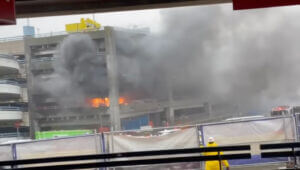 hospitalized after battling a two-vehicle inferno in a JFK Airport parking garage on the afternoon of Tuesday, March 3. The FDNY arrived and eventually extinguished the fire.
Parking garage fires present unique challenges for firefighters, police officers, and emergency medical personnel due to low overhead clearance that prohibits fire apparatus from entering the structure.
Fortunately, the three Port Authority police officers were treated and released from the hospital.
JFK Parking Garage Fire Sends Three PAPD Officers to Hospital
‘Treat it just like a real plane crash’: First responders in Alabama practice disaster response
By Abby Haymond
HALE COUNTY, Ala. (WBRC) - Smoke, flames,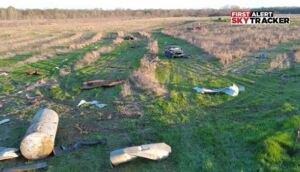 and hundreds of first responders — what looked like a real plane crash unfolded south of Greensboro Thursday evening, March 6, but it was all by design.
Land in Hale County was transformed into the site of a mass casualty event, complete with fires, a simulated plane crash, cars struck by debris and “victims” stranded in a lake. It was one of the largest disaster drills the region has seen in years.
Around 70 agencies across different counties worked side by side, each bringing different resources and expertise to the exercise.
“It’s very important for all of our counties to train together so if there is ever a mass casualty event we all know each other, and we can all work together,” said Russ Weeden, Hale County Emergency Management Agency (EMA) Director.
Medical staff from five local hospitals were stationed at a mobile command center on site, working to treat around 100 “victims”. These “victims” were actually actors with makeup and effects to simulate real injuries staged across the scene. Responders were sent out to rescue and recover them all.
“Most of those patients are going to be severely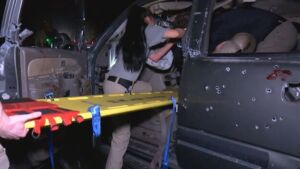 injured. They’ve all gotta come to our mobile hospital. There’s nurses here from five different hospitals and we’ve got triage in the field so we’re gonna treat it just like it’s a real plane crash,” Weeden said.
The drill is part of an annual training exercise — one that Weeden says is critical for real-world preparedness. Normally, the focus is tornado response, one of Alabama’s most common threats, but about once every decade, EMA leaders scale up to larger mass casualty events like Thursday’s plane crash simulation.
Weeden says the goal is simple: when disaster strikes for real, teams need to be prepared and know how to reach each other.
“If we have a big tornado here with injuries, then I wanna know who’s coming and I wanna have their contact,” he said.
EMA leaders say they will review Thursday’s response and use what they learn to improve their emergency plans going forward.
https://www.wbrc.com/2026/03/06/treat-it-just-like-real-plane-crash-first-responders-alabama-practice-disaster-response/
NTSB Final Report: Grumman American Avn. Corp. GA-7
Pilot Arrived At The Departure Airport Around 1230 And Made It Clear That He Was “In A Hurry...”
Location: Coatesville, Pennsylvania Accident Number: ERA24FA103
Date & Time: February 1, 2024, 13:30 Local Registration: N887CC
Aircraft: Grumman American Avn. Corp. GA-7 Aircraft Damage: Substantial
Defining Event: Fuel contamination Injuries: 1 Fatal
Flight Conducted Under: Part 91: General aviation - Positioning
Analysis: The most recent annual inspection was completed about 45 days before the accident. After completion of the annual inspection the airplane was flown to another airport, where it would be the subject of a restoration project and then sold. The airplane then sat outside, and during that period the airport received about 10 inches of precipitation. The purpose of the accident flight was to deliver the airplane to its new owner.
According to company and airport employees, the pilot arrived at the departure airport around 1230 and made it clear that he was “in a hurry,” as he had a return flight booked for 1800 that evening. According to witnesses, the airplane was fueled with 80 gallons of 100LL fuel and the pilot performed a very brief and incomplete preflight inspection, which did not include obtaining fuel samples from either of the airplane’s fuel tanks. During takeoff, the airplane’s engine “popped,” which was followed by sputtering and an aggressive turn to the right (consistent with a Vmc roll), before it disappeared behind the trees.
Postaccident examination of the airplane revealed that both fuel tanks were intact and fuel was observed in the tanks. Fuel samples taken from the sump tank, engine-driven fuel pump, and the carburetor bowl on the airplane’s right side all contained water and debris. The examination also revealed that the right fuel cap was missing its gasket, which was required, and should have been detected during the most recent annual inspection.
Probable Cause and Findings: The National Transportation Safety Board determines the probable cause(s) of this accident to be -- The pilot’s inadequate preflight inspection, which resulted in a loss of engine power due to water-contaminated fuel, and his subsequent loss of control. Contributing to the accident was an inadequate annual maintenance inspection, during which maintenance personnel failed to detect and replace the missing right fuel cap gasket.
FMI: www.ntsb.gov
Today in History
23 Years ago today: On 6 March 2003 Air Algérie flight 6289, a Boeing 737-200, crashed shortly after takeoff from Tamanrasset-Aguemar Airport, Algeria, killing 102 occupants; 1 survived the accident.
| Date: | Thursday 6 March 2003 |
| Time: | 15:15 |
| Type: | Boeing 737-2T4 |
| Owner/operator: | Air Algérie |
| Registration: | 7T-VEZ |
| MSN: | 22700/885 |
| Year of manufacture: | 1982 |
| Total airframe hrs: | 41472 hours |
| Cycles: | 27184 flights |
| Engine model: | P&W JT8D-17A (HK3) |
| Fatalities: | Fatalities: 102 / Occupants: 103 |
| Other fatalities: | 0 |
| Aircraft damage: | Destroyed, written off |
| Category: | Accident |
| Location: | Tamanrasset Airport (TMR) - Algeria |
| Phase: | Initial climb |
| Nature: | Passenger - Scheduled |
| Departure airport: | Tamanrasset-Aguemar Airport (TMR/DAAT) |
| Destination airport: | Ghardaïa-Noumérat Airport (GHA/DAUG) |
| Investigating agency: | CNE |
| Confidence Rating: | Accident investigation report completed and information captured |
Narrative:
Air Algérie flight 6289, a Boeing 737-200, crashed shortly after takeoff from Tamanrasset-Aguemar Airport, Algeria, killing 102 occupants; 1 survived the accident.
Air Algérie flight 6289 originated in Tamanrasset and was bound for Algiers, with an intermediate stop at Ghardaia. Takeoff was commenced from runway 02 with the co-pilot acting as pilot-in-command. The aircraft rotated and at 15:14:52 the co-pilot ordered the gear to be raised. At that moment, at a height of 78 feet and a speed of 158 kts, the no. 1 engine suffered a turbine failure. The captain took over control of the airplane. Three seconds later the co-pilot asked if she should raise the gear, but the captain did not respond. The 737 lost speed and at 15:15:06 the speed had dropped to 134 kts. Height at that moment was 398 ft. The aircraft, named "Monts du Daia", stalled and crashed and broke up on rocky terrain about 1645 metres past the runway.
PROBABLE CAUSES: The accident was caused by the loss of an engine during a critical phase of flight, the non-retraction of the landing gear after the engine failure, and the Captain, the PNF, taking over control of the airplane before having clearly identified the problem.
The following factors probably contributed to the accident:
- the perfunctory flight preparation, which meant that the crew were not equipped to face the situation that occurred at a critical moment of the flight;
- the coincidence between the moment the failure occurred and the request to retract the landing gear;
- the speed of the event that left the crew little time to recover the situation;
- maintaining an inappropriate rate of climb, taking into account the failure of one engine;
- the absence of any teamwork after the engine failure, which led to a failure to detect and correct parameters related to the conduct of the flight (speed, rate of climb, configuration, etc.);
- the takeoff weight being close to the maximum with a high aerodrome altitude and high temperature;
- the rocky environment around the aerodrome, unsuitable for an emergency landing.
