Sad news from Fort Lauderdale where one of our own, Broward Sheriff's Office Firefighter/Paramedic Steven Lepselter, died after he suffered a medical emergency while on duty Easter Morning.
Over his 19 year career with the BSO, some of Steven’s assignments have included the Airport, Seaport, Hazardous Materials (HazMat), Air Rescue and the Training Division.
Our heartfelt condolences go out to his family and friends as well as his BSO family of Firefighters, Paramedics and Sheriffs Officers.
May He Rest in Peace…
-
BSO firefighter and paramedic dies after suffering medical emergency while on duty at FLL
It was around 6:55 a.m. on Sunday when deputies and fire rescue personnel responded to a medical call at the Palm Garage at Fort Lauderdale-Hollywood International Airport, Broward Sheriff Dr. Gregory Tony announced.
By Briana Trujillo
Broward Sheriff's Office Fire Rescue is mourning the unexpected loss of a firefighter and paramedic who suffered a medical emergency while on duty Easter Morning.
It was around 6:55 a.m. on Sunday when deputies and fire rescue personnel responded to a medical call at the Palm Garage at Fort Lauderdale-Hollywood International Airport, Broward Sheriff Dr. Gregory Tony announced.
When they arrived, they found Firefigher/Paramedic Steven Lepselter unresponsive on the ground. He was rushed to Broward Health Medical Center where he was pronounced dead. Lepselter was just 54.
Lepselter was ending his fire watch at the airport and preparing to head to his regular shift in Weston when he was found unresponsive in the garage, officials said.
A cause of death was not immediately provided.
In a statement, BSO Fire Rescue said:
"[Lepselter] proudly served Broward County with dedication, professionalism and compassion for more than 19 years. He began his fire rescue career with BSO’s Department of Fire Rescue and Emergency Services in January 2007. Throughout his distinguished career, he served in multiple specialized divisions, including the Airport, Seaport, Hazardous Materials (HazMat), Air Rescue and the Training Division.
'This loss of Firefighter/Paramedic Lepselter is deeply felt across our entire organization. Moments like this affect each of us in different ways,' Sheriff Dr. Gregory Tony said. 'Throughout his career, he exemplified the values of BSO, consistently putting the needs of the community and his fellow team members above all else. He will be remembered not only for his commitment to the mission, but also for the lasting impact he had on those who had the privilege of working alongside him.'
Known for his unwavering dedication, Firefighter/Paramedic Lepselter exemplified service, compassion and professionalism. In his role within the Training Division, he was deeply committed to mentoring and shaping the next generation of firefighter/paramedics. He brought unmatched passion to his work and consistently provided expert care, comfort and reassurance to those during their most significant time of need. Arrangements are pending."
https://www.nbcmiami.com/news/local/bso-firefighter-and-paramedic-dies-after-suffering-medical-emergency-while-on-duty-at-fll/3791450/
Small plane makes emergency landing on I-78 in Lehigh County: PSP
By Madison Montag | mmontag@pennlive.com
A small plane on Saturday was forced to make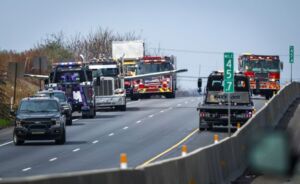 an emergency landing along Interstate 78 in Lehigh County, according to Pennsylvania State Police and local news reports.
Trooper Nathan Branosky, the public information officer for Pennsylvania State Police’s Troop M, posted on social media just before 10 a.m., saying the plane crashed in the area of I-78 east in Weisenberg Township.
Around 11 a.m., Branosky said two people were on board and nobody was injured. All lanes of I-78 west are open, but eastbound traffic is being detoured at exit 40.
Branosky later told The Morning Call the plane landed around 9:19 a.m.
FlightAware, an online flight tracker, showed the single-propeller plane taking off from Readington, New Jersey at 8:48 a.m.
About 30 minutes after taking off, the flight tracker shows the westbound plane turn around and land on the highway.
The plane was scheduled to land in Pittsburgh at 10:53 a.m., FlightAware said.
https://www.pennlive.com/news/2026/04/small-plane-makes-emergency-landing-on-i-78-in-lehigh-county-psp.html
Emergency crews respond to small plane crash at Luverne Airport
By Dakota News Now staff
ROCK COUNTY, M.N. (Dakota News Now) - Update: Authorities released more information on the small plane crash that happened on Friday in Rock County, Minnesota.
According to the Rock County Sheriff’s Office, at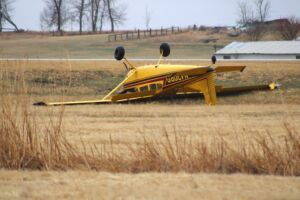 around 10:20 a.m., a 911 call was made reporting that a small yellow plane attempted to land, crashed and was sitting on its roof.
Emergency services were dispatched, and the FAA was contacted as well.
First arriving units reported that two occupants, an instructor pilot from Knox, Indiana, and a student pilot from Humboldt, South Dakota, were out and walking around uninjured. They were checked by ambulance personnel and refused transport.
Authorities said the two were making practice landings at the airport, and there was light rain and cross winds at the time of the crash.
Previously: According to the Rock County Star Herald, a small plane crashed at the Luverne Airport on Friday.
Not much information is known at this time, but the Federal Aviation Administration is assisting local emergency officials.
No injuries have been reported as of the time of publishing.
Stay with Dakota News Now as more information is made available.
https://www.dakotanewsnow.com/2026/04/03/emergency-crews-respond-small-plane-crash-luverne-airport/
Air France in emergency landing over ‘suspicious odour’
Alva Solomon
Emergency response crews raced to LF Wade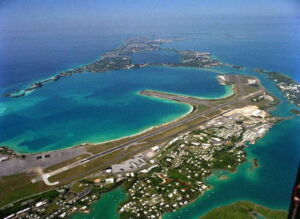 International Airport yesterday after an overflying Air France flight experienced an electrical issue on board.
At 4.41pm, Air France flight 178 was en route to Aeropuerto Internacional Benito Juárez in Mexico from Paris Charles De Gaulle Airport in France when the pilot diverted to Bermuda for an emergency landing.
Lester Nelson, the chief executive of the Bermuda Airport Authority, said: “The diversion was due to the pilot’s report of a suspicious odour in the cabin, believed to be electrical, and the aircraft landed safely at the LF Wade International Airport, with the airport’s airport fire department on standby.”
He said the carrier was co-ordinating with its airline partners in Bermuda to transport passengers to their destination.
The emergency resulted in other fire trucks on the island racing to the airport to provide support to teams on the airside.
https://www.royalgazette.com/transport/news/article/20260403/air-france-in-emergency-landing-over-suspicious-odour/
NTSB Final Report: Cozy Mark IV
The Airplane Landed Short Of The Runway Threshold And Its Nose Landing Gear Separated As The Airplane Transitioned Onto The Asphalt Runway
Location: Gonzales, Texas Accident Number: CEN24LA141
Date & Time: March 25, 2024, 18:53 Local Registration: N20MN
Aircraft: Cozy Mark IV Aircraft Damage: Substantial
Defining Event: Loss of engine power (total) Injuries: 1 None
Flight Conducted Under: Part 91: General aviation - Personal
Analysis: While enroute, at 9,500 ft above mean sea level (msl), the engine lost all power. After multiple attempts to restart the engine, the pilot executed a forced landing to a nearby airport. The airplane landed short of the runway threshold and its nose landing gear separated as the airplane transitioned onto the asphalt runway. The left wing and left canard sustained substantial damage.
Postaccident examination of the engine revealed that the left crankshaft idler gear shaft separated from its attach points, which prevented the crankshaft idler gear from engaging its corresponding crankshaft and camshaft gears. The disengagement prevented camshaft rotation and valvetrain timing to the crankshaft. The left crankshaft idler gear’s attachment hardware were both separated into two sections from abrasion. The capscrew was lockwired to the idler shaft but no lockwire was observed through the stud and slotted shear nut.
It is likely that maintenance personnel did not follow the engine manufacturer’s service instructions and undertorqued the fasteners during installation, resulting in insufficient clamping force. Additionally, the absence of lockwire likely permitted the shear nut to back off during engine operation. Because the airplane’s maintenance records were not available for review, the investigation was not able to identify when the crankshaft idler gear was last serviced.
Probable Cause and Findings: The National Transportation Safety Board determines the probable cause(s) of this accident to be -- Maintenance personnel’s failure to properly torque the crankshaft idler gear hardware according to the engine manufacturer’s service instructions, which resulted in separation of the crankshaft idler gear’s fasteners and disengagement of the camshaft, crankshaft, and crankshaft idler gear and a subsequent total loss of engine power.
FMI: www.ntsb.gov
NTSB Final Report: James E Davidson Jr RANS S7S Courier
On Previous Flights, The Engine Had Produced Less Power Than The Pilot Expected
Location: Benson, Arizona Accident Number: WPR24LA130
Date & Time: April 22, 2024, 09:42 Local Registration: N599YY
Aircraft: James E Davidson Jr RANS S7S Courier Aircraft Damage: Substantial
Defining Event: Fuel starvation Injuries: 1 None
Flight Conducted Under: Part 91: General aviation - Personal
Analysis: The pilot was evaluating the airplane’s engine performance with a different fuel after changes were made to the fuel system. Shortly after a normal takeoff, the pilot noticed a low fuel pressure warning. The engine subsequently sustained a partial and then total loss of power. The pilot restarted the engine, and it momentarily produced power. As he advanced the throttle, the engine again stopped producing power. During an off-airport landing, the main landing gear collapsed.
On previous flights, the engine had produced less power than the pilot expected. In response, he performed an engine examination and observed lead deposits on the exhaust valves. He contacted the engine manufacturer, who recommended switching from 100LL avgas to unleaded auto fuel. The pilot then created a mixture of winter-blend auto fuel and a small, precise amount of 100LL avgas.
An examination of the engine revealed no evidence of mechanical malfunctions or failures that would have precluded normal operation. Examination of the fuel system revealed that the inside diameter of the fuel supply and return lines were smaller than recommended by the engine manufacturer. This undersized condition limited the volume of fuel available to the engine.
A small fuel leak was discovered at an exit fitting in one of the fuel pumps. Investigators could not determine if the leak existed before the accident or if it was a result of impact forces. Additionally, the vent tube in the left-wing fuel tank was obstructed and did not permit airflow until investigators inserted a small wire several inches into the tube, after which the vent permitted air passage.
Accident flight data recorded by the airplane’s engine monitoring device revealed that the fuel pressure and flow both declined slowly as the flight progressed and became increasingly erratic. Shortly thereafter, a sudden and complete loss of both fuel pressure and flow occurred. When the pilot attempted to restart the engine, the available fuel pressure and flow was insufficient to sustain engine operation. Recorded data from the flight was consistent with air bubbles present in the fuel system, followed by fuel starvation due to vapor lock. After an operational test of the engine, several firewall-mounted fuel-system components (including the gascolator, fuel filters, electric fuel pumps, and associated metal fuel lines) that had been positioned near the engine exhaust system remained hot for more than 20 minutes after engine shutdown. Under these heat-soaked conditions, investigators noted that the fuel pumps required an extended period to achieve priming, and the fuel exiting the pumps initially appeared cloudy and aerated before gradually clearing as normal pressure and flow were restored. The pumps emitted abnormal noises consistent with cavitation during the period when cloudy, vapor-entrained fuel was present.
The locally procured auto fuel was a winter blend, which is formulated in a manner that makes it susceptible to vaporization at warmer fuel temperatures. Because the fuel was routed through metal fuel system components exposed to exhaust heat, the fuel in the system was likely heated to a temperature that resulted in vaporization. Although the investigation also found a small leak at a fuel line exit fitting and a blocked vent tube in the left-wing fuel tank, the engine data and postaccident engine testing was consistent with fuel vaporization. The vaporization of the fuel likely led to a vapor-lock condition and subsequent fuel starvation.
Probable Cause and Findings: The National Transportation Safety Board determines the probable cause(s) of this accident to be -- The pilot’s unintentional use of a winter-blend fuel that was susceptible to vaporization, which resulted in fuel starvation and a loss of engine power due to vapor lock. Contributing to the accident was the airplane’s undersized fuel lines, which limited the available fuel flow and volume.
FMI: www.ntsb.gov
NTSB Prelim: Experimental Homebuilt Airshark
One Of The Pilots Decided To Conduct A Local Flight To Verify The Airplane Was Performing Normally
Location: Statesboro, GA Accident Number: CEN26FA147
Date & Time: March 25, 2026, 14:53 Local Registration: N220AS
Aircraft: Experimental Homebuilt Airshark Injuries: 1 Fatal
Flight Conducted Under: Part 91: General aviation - Personal
On March 25, 2026, about 1453 eastern daylight time, an experimental homebuilt Airshark airplane, N220AS, was substantially damaged when it was involved in an accident near Statesboro, Georgia. The pilot was fatally injured. The airplane was operated as a Title 14 Code of Federal Regulations Part 91personal flight.
The airplane was being prepared for a ferry flight from Statesboro, Georgia, to Carrollton, Georgia, when one of the pilots decided to conduct a local flight to verify the airplane was performing normally before beginning the cross-country flight. Local authorities received a cell phone crash alert at 1453. First responders located the wreckage in a wheat field where it came to rest inverted.
The airplane struck a tree in about a 14° right wing low attitude about 42 feet above the ground on a 062° magnetic heading. A ground scar at 215 feet forward from the tree appeared to have been created by a propeller strike. At 218 feet from the tree, a large ground scar led up to the airplane which came to rest inverted 245 feet from the tree. An impression in the soil to the left of the large groundscar was consistent with the right wing as evidenced by the green position light lens found at the outer end of the impression.
An on site examination of the wreckage revealed no anomalies were found with the flight control system or flight control surfaces. Flight control continuity was verified for the ailerons, rudder, and elevators.
The airplane was reported to have been fueled to capacity (118 gallons) before the accident flight. The fuel selector in the cockpit was in the left fuel tank position. Both fuel tanks were breached, and the surrounding vegetation was yellow in the field where the wreckage came to rest. The right fuel cap and its receptacle were separated from the wing but present in the debris field next to the airplane. Both fuel caps were present and secure in their receptacles.
To facilitate viewing the fuel tank finger screens with a borescope, access holes were made in the wings near the wing root in the top wing skin. The right fuel tank finger screen was free of obstructions. The left fuel tank finger screen was corroded and appeared to be 30 to 40% obstructed. The obstruction’s appearance was consistent with solder used to manufacture the finger screen’s seam and end cap and did not appear to be foreign object debris from the fuel tank. Both fuel tanks were clean and free of debris in the area around the finger screens.
The airplane was equipped with a bail type gascolator and an inline paper element style fuel filter. The bail type gascolator bowl was sampled and blue liquid with an odor consistent with 100LL aviation fuel was collected in a container. When water-indicating paste was applied to the fuel, there was a small amount of water present (a tiny portion of the paste turned bright red). The gascolator bowl was removed and there was about a ½ teaspoon of water present.
There was no filtering element or screen present in the gascolator bowl, and rust was present in the bottom of the bowl.
The paper style fuel filter was removed from its mount. It contained blue liquid consistent with the appearance and odor of 100LL aviation fuel. Water-indicating paste was added to the fuel. It did not indicate any water was present. The paper filter element was generally clean. Some rust and corrosion were present in the metal housing.
No leaks or anomalies were noted along the fuel lines in the airframe. Fuel was present in the engine compartment fuel lines and all the engine fuel system components examined. The fuel injector servo and fuel flow divider were disassembled and no anomalies were noted. The engine driven fuel pump was removed from the engine and produced air at the outlet port when it was actuated by hand. The unit was disassembled and no anomalies were noted.
The engine valve covers were removed and crankshaft continuity to the rear gears and to the valvetrain was confirmed. Compression and suction were observed from all six cylinders. A wire screen covered the fuel injector servo; corrosion and some trapped debris were present. No other induction air filtration system was present for this installation. Both magnetos exhibited impact damage. The left magneto did not produce spark when rotated by hand. The right magneto produced spark when it was rotated with a drill. The spark plug electrodes exhibited dark grey coloration and normal wear signatures. The No. 3 bottom spark plug electrodes were oil soaked. The ignition harness was secure and no damage was noted. Oil was observed in the engine. The oil suction screen contained about ¼ teaspoon of dark granular material. The oil filter was not examined due to impact damage.
The propeller remained attached to the engine. One blade was bent aft about 20° about 10 inches from its tip. One blade was curved aft about 50° about 12 inches from its tip. One blade was curved aft about 80° about 12 inches from its tip. All three blades were twisted in varying amounts towards their respective blade faces.
A Levil Flight Aviation broadcasting outer module (BOM) was found on the ground next to the airplane, which had been attached to one of the wing’s lower wing skin access covers. The unit is capable of providing flight data wirelessly to a phone or tablet in the cockpit when properly configured. The unit was reported to have been installed the day of the accident flight, but the contracted ferry flight pilot declined to configure the device due to time constraints. According to the manufacturer’s website, the unit may contain a flash memory card. The unit was retained for further examination.
FMI: www.ntsb.gov

Today in History
68 Years ago today: On 6 April 1958 Capital Airlines flight 67, a Vickers Viscount, crashed following a loss of control due to icing while on approach to Freeland-Tri City Airport, Michigan, USA, killing all 47 occupants.
| Date: | Sunday 6 April 1958 |
| Time: | 23:19 |
| Type: | Vickers 745D Viscount |
| Owner/operator: | Capital Airlines |
| Registration: | N7437 |
| MSN: | 135 |
| Year of manufacture: | 1956 |
| Engine model: | Rolls-Royce Dart 510 |
| Fatalities: | Fatalities: 47 / Occupants: 47 |
| Other fatalities: | 0 |
| Aircraft damage: | Destroyed, written off |
| Category: | Accident |
| Location: | 0,7 km SW from Freeland-Tri City Airport, MI (MBS) - United States of America |
| Phase: | Approach |
| Nature: | Passenger - Scheduled |
| Departure airport: | Flint-Bishop Airport, MI (FNT/KFNT) |
| Destination airport: | Freeland-Tri City Airport, MI (MBS/KMBS) |
| Investigating agency: | CAB |
| Confidence Rating: | Accident investigation report completed and information captured |
Narrative:
Capital Airlines flight 67, a Vickers Viscount, crashed following a loss of control due to icing while on approach to Freeland-Tri City Airport, Michigan, USA, killing all 47 occupants.
Capital Airlines Flight 67 was scheduled between New York-LaGuardia Airport, and Chicago, Illinois, with intermediate stops at Detroit, Flint, Tri-City Airport (serving Saginaw, Bay City, and Midland), Michigan. N7437, the aircraft to be used on this flight, was flown from Cleveland, Ohio, and, because of weather and field conditions at LaGuardia , was landed at Newark Airport, New Jersey. Accordingly, Flight 67 was rescheduled to originate at Newark instead of La Guardia.
The flight departed Newark at 19:16, 1 hour and 16 minutes late. The trip to Flint was routine; the aircraft landed there at 22:37. Flight 67 departed Flint for Tri-City Airport at 23:02 and was to be flown in accordance with an IFR clearance at a cruising altitude of 3600 feet.
While en route the flight called Saginaw ATCS (Air Traffic Communication Station) and was given the local 23:00 weather observation and the runway in use, No. 5. The Tri City Airport does not have a traffic control tower. The 23:00 Saginaw weather was reported as: Measured ceiling 900 feet , overcast; visibility 3 miles; light snow showers; temperature 34; dewpoint 33; wind north-northeast 18, peak gusts to 27 knots, altimeter 29.48.
At 23:16 Flight 67 advised Saginaw radio that it was over the airport. A short time later, ground witnesses observed the lights of the aircraft when it was on the downwind leg of the traffic pattern. The aircraft was seen to make a left turn onto base leg and at this time the landing lights of the aircraft were observed to come on. During this portion of the approach the aircraft was flying beneath the overcast, estimated to be 900 feet, and appeared to be descending. When turning on final, the aircraft flew a short distance beyond the extended centerline of the runway
and its bank was steepened considerably to effect realignment. The aircraft was observed to return to level flight and pitched steeply down. It impacted the ground and burst into flames.
PROBABLE CAUSE: "An undetected accretion of ice on the horizontal stabilizer which, in conjunction with specific airspeed and aircraft configuration, caused a loss of pitch control."
