We close out this week with these stories...
Have a safe weekend!
Tom
--
San Juan Islands plane crash: Kenmore Air floatplane crashes near Sucia Island
A Kenmore Air floatplane made an emergency landing and then caught fire near Sucia Island in the San Juan Islands, in Washington State on Thursday, July 23.
By Shuvrajit Das Biswas
A Kenmore Air floatplane reportedly crashed in San Juan Islands, Washington State on Thursday, July 23. The aircraft made an emergency landing and then caught fire near Sucia Island. The news about the plane was confirmed by the U.S. Coast Guard Sector of Puget Sound.
The Kenmore Air floatplane on fire after the crash in the San Juan Islands area. (Facebook/Puget Sound Boating and Dave Eastman)
The plane had 11 people on board – 10 passengers and the pilot. As per The Seattle Times all have survived. Four reportedly sustained serious injuries, as per NBC-affiliate King5. Of this, two were shifted to Bellingham and two were moved to Orcas Island, more reports indicated.
Orcas Island Fire and Rescue confirmed the news. “OIFR and San Juan County Sheriff’s Office are staged at Brandt’s Landing marina, waiting to receive patients with Airlift Northwest. OIFR has four ambulances ready. Four OIFR responders are on the water working with State Parks,” they said in a statement.
Meanwhile, the San Juan County Sheriff's Office said that one person is in critical condition with injuries ranging from ‘head injuries to broken bones and lacerations’.
The floatplane, which was a single-engine turboprop aircraft, had taken off at 4:30pm from Lake Union in Seattle and went down around 5:15pm in Shallow Bay, which is off Sucia Island.
Kenmore Air releases statement
Kenmore Air CEO David Gudgel released a statement after the crash, saying “This evening one of our aircraft was involved in an accident near Sucia Island.”
He added “We are grateful that everyone aboard has been accounted for, and our immediate focus is ensuring our passengers and pilot receive the care and support they need. We extend our sincere thanks to the United States Coast Guard, local emergency responders, and everyone assisting in the response. Kenmore Air is fully cooperating with the investigating authorities, and we will continue providing verified information as it becomes available."
A cause for the crash has not been speculated on, out of respect for those involved, Kenmore Air said.
The crash is being investigated by the National Transportation Safety Board and the FAA. San Juan Island Fire and Rescue, Lopez Island Fire and Rescue, San Juan County Parks, U.S. Coast Guard and the San Juan County Sheriff’s Office are among additional agencies responding to the Kenmore Air crash.
Pilot, Passenger Unhurt in Geauga Airport Plane Crash.
by Allison Wilson
A pilot and passenger escaped injury after a small aircraft crashed while attempting to land at the Geauga County Airport July 23, marking the third aircraft-related emergency in the Middlefield area in three months.
First responders were dispatched to the airport at 9:42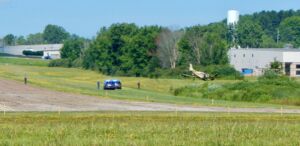 a.m.
a.m.
The previous two incidents involved an emergency landing in May after a landing gear failure, and a fatal plane crash in a field in June that killed three people.
Middlefield Assistant Fire Chief Ben Reed said the three incidents were unrelated.
“It’s not like there’s a pattern developing or anything like that,” he said. “It’s not like there’s something happening on purpose or the pilots aren’t trained. Every event that we’ve had, the pilots are experienced and licensed and know what they’re doing.”
According to the Ohio State Highway Patrol, the most recent incident involved 28-year-old pilot Isaac R. Long, of Troy, Mo., attempting to land a 1968 Beechcraft Musketeer when he lost control and went off-course, ultimately striking an embankment and wind tee before stopping.
Long was serving as a flight instructor at the time but was in control of the aircraft, OSHP said in a press release.
Also on board was the plane’s owner, 47-year-old Nathan J. Long, of Huntsburg.
Both men were wearing safety belts and were not injured, OSHP said.
“Luckily, everybody was okay,” Reed said. “We had some very experienced people working and the scene was under control pretty quick.”
According to the Geauga County Sheriff’s Office incident report, the aircraft sustained damage in the crash.
“There was a lot of damage to the plane (and some to a) small piece of the airport equipment, not a wind sock but something similar,” Reed said. “But the plane itself had some pretty significant damage.”
An investigator with the Cleveland office of the Federal Aviation Administration responded to the scene, according to OSHP. The Middlefield Fire Department also assisted.
The crash remains under investigation.
Plane crashes during landing at Van Zandt County Regional Airport
By KLTV Digital Media Staff
WILLS POINT, Texas (KLTV) - A pilot is safe after a plane crash at Van Zandt County Regional Airport. 
The plane was coming in for a landing around 12:56 p.m. when the pilot lost control and missed the runway, according to Wills Point Volunteer Fire Department Chief Ed Leipply.
The pilot was not injured, Leipply said.
He added the plane remained upright in the crash, but sustained damage, including to its propeller and elevator.
https://www.kltv.com/2026/07/23/plane-crashes-during-landing-wills-point-airport/
Two occupants' conditions unknown after a single-engine plane crash near Kearneysville
By Bonnie Williamson
KEARNEYSVILLE, W.Va. — A small single-engine plane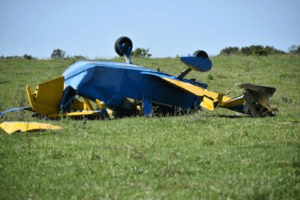 crashed in a field near 494 Harry Shirley Rd. in Kearneysville Thursday afternoon. The plane had two occupants whose conditions have not yet been released.
Jefferson County Deputy Hunter Ray said it was an active investigation involving other agencies.
Ray, who responded to the scene, said the call about the crash came in at 2:20 p.m. The bright yellow aircraft was in pieces, with its engine several feet away from the remains of the plane.
Ray would not comment on the plane’s occupants, but a scanner page with Eastern Panhandle Working Fires reported that both were injured. Medical aviation was requested to the scene for one of them.
https://www.spiritofjefferson.com/news/article_274f6611-0668-415a-993c-2d86c5ff59fe.html
F-16 Ejection Seat Fight Paused
Air Force Review Could Shape The Future Of Fighter Pilot Safety
One of the Air Force's most significant pilot safety 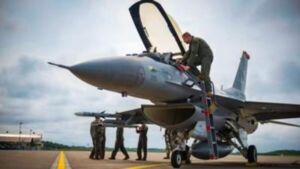 programs has unexpectedly hit the brakes. A long awaited competition to equip the F-16 with a next generation ejection seat is now on hold, raising fresh questions about the future of several frontline aircraft. The decision may shape more than a single fighter program. It could influence the next chapter of combat aircraft survivability.
Nearly two years after announcing plans to reopen competition for the F-16 Fighting Falcon's Next Generation Ejection Seat program, the US Air Force has suspended the effort for at least 90 days while officials conduct what the service calls a comprehensive assessment of operational requirements and acquisition alternatives.
The pause follows years of shifting momentum. Collins Aerospace originally secured the sole source contract in 2019 with its ACES 5 ejection seat, but integration delays prompted the Air Force to reopen the acquisition in 2024, creating an opportunity for Martin-Baker to enter the competition with its US18E seat, already qualified for export F-16s.
A Collins spokesperson said ACES 5 "meets the U.S. Air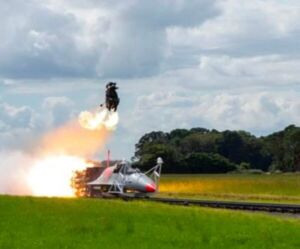 Force's rigorous technical and safety requirements" and emphasized the company's commitment to providing pilots with the highest level of protection when it matters most. Martin-Baker's Steve Roberts confirmed the company received notice of the suspension in June, adding, "We don't know why," while expressing hope that the Air Force ultimately resumes the competition.
The outcome reaches well beyond the F-16. The Air Force has confirmed that modernization strategies for the F-22 Raptor will follow the final decision on the F-16, while Collins continues fielding ACES 5 in the T-7 Red Hawk and B-2 Spirit. As military aviation enters a new era of rapidly evolving threats, the choice ahead is about far more than selecting an ejection seat. It is about deciding how the next generation of American fighter pilots will be protected when every fraction of a second counts.
FMI: www.martin-baker.com
NTSB Final Report: Pipistrel Alpha Trainer
About 8 Nautical Miles From The Destination, The Engine Lost All Power
Location: Peyton, Colorado Accident Number: CEN26LA165
Date & Time: April 14, 2026, 04:17 Local Registration: N495LP
Aircraft: Pipistrel Alpha Trainer Aircraft Damage: Substantial
Defining Event: Fuel exhaustion Injuries: 2 None
Flight Conducted Under: Part 91: General aviation - Personal
Analysis: The two commercial rated pilots were conducting a night cross-country flight with the purpose of building flight time. The pilots assessed fuel while on the return leg of their planned route and decided that there was enough fuel to conduct a practice instrument approach at another airport. After completing the practice approach, about 4 gallons of fuel was indicated on the fuel gauge and the pilots flew toward their destination. Subsequently, about 8 nautical miles from the destination, the engine lost all power. The right seat pilot conducted a forced landing to a field during which the airplane sustained substantial damage to the fuselage. Postaccident inspection of the fuel system showed no fuel visible in the tank and about 1/2 teaspoon of fuel was drained from the sump. Post-accident examination of the airplane revealed no evidence of any preaccident mechanical malfunctions or failures that would have precluded normal operation.
According to the right seat pilot, there was a squawk on the airplane stating that the fuel gauge indicated about 2.5 to 3 gallons high. She stated that the squawk was not seen before the accident flight. According to the flight school, upon dispatching, pilots are automatically presented with open squawks to review through the company dispatching software.
Probable Cause and Findings: The National Transportation Safety Board determines the probable cause(s) of this accident to be -- The pilots’ inadequate preflight fuel planning and improper in-flight fuel management, which resulted in a total loss of engine power due to fuel exhaustion and subsequent forced landing to a field.
FMI: www.ntsb.gov

Today in History
12 Years ago today: On 24 July 2014 Air Algérie flight 5017, a McDonnell Douglas MD-83 operated by Swiftair, was destroyed when it crashed following an in flight loss of control 80 km northwest of Gossi, Mali. All 116 occupants sustained fatal injuries.
| Date: | Thursday 24 July 2014 |
| Time: | 01:47 |
| Type: | McDonnell Douglas DC-9-83 (MD-83) |
| Owner/operator: | Air Algérie, lsf Swiftair |
| Registration: | EC-LTV |
| MSN: | 53190/2148 |
| Year of manufacture: | 1996 |
| Total airframe hrs: | 38362 hours |
| Cycles: | 32390 flights |
| Engine model: | P&W JT8D-219 |
| Fatalities: | Fatalities: 116 / Occupants: 116 |
| Other fatalities: | 0 |
| Aircraft damage: | Destroyed, written off |
| Category: | Accident |
| Location: | 80 km NW of Gossi - Mali |
| Phase: | En route |
| Nature: | Passenger - Scheduled |
| Departure airport: | Ouagadougou Airport (OUA/DFFD) |
| Destination airport: | Algiers-Houari Boumediene Airport (ALG/DAAG) |
| Investigating agency: | CEAIAC |
| Confidence Rating: | Accident investigation report completed and information captured |
Narrative:
Air Algérie flight 5017, a McDonnell Douglas MD-83 operated by Swiftair, was destroyed when it crashed following an in flight loss of control 80 km northwest of Gossi, Mali. All 116 occupants sustained fatal injuries.
The airplane was operated by Spanish airline Swiftair on behalf of Air Algérie as flight AH5017 from Ouagadougou, Burkina Faso to Algiers, Algeria.
Flight 5017 took off from runway 22 at Ouagadougou Airport (OUA) at 01:15 UTC (and local time). Following a right turn after takeoff the aircraft headed to the EPOPO point and started climbing to the planned cruising altitude of FL310.
At an altitude of about 10,500 ft, autopilot 1 was engaged, the autothrottle having been active since takeoff. Nine minutes after takeoff, the crew said that they were passing through FL145 and that they estimated EPEPO point at 01:38.
At 01:28, the airplane was transferred to the Ouagadougou CCR and the crew said that they were turning to the left on heading 356° to avoid an bad weather in the area.
During the climb towards FL310, the crew made three heading alterations to the left (of 28°, of 4° then of 8°), then an alteration to the right of 36° to return to heading 019°, close to the initial heading.
At 01:37, the airplane levelled off at FL310 at Mach 0.740. The autopilot then maintained the altitude and heading, while the speed was controlled by the autothrottle. At the same time, the airplane was transferred to the Niamey CCR. In the two minutes following level-off, the airplane's speed increased.
From 1 h 38 min 34, and for about 30 seconds, the autothrottle was in MACH ATL mode. This mode automatically engaged because the thrust needed to reach the Mach speed selected by the pilots was greater than the EPR limit.
The engines' EPR stabilised around 1.92 and the Mach changed from 0.758 to 0.762. The autothrottle then returned to MACH mode and the airplane continued to accelerate up to Mach 0.775.
At 01:39:36, the airplane's speed started to decrease. About one minute later the autothrottle changed back to MACH ATL while the Mach was 0.752. Following that, the altitude remained stable, pitch and EPR increased progressively, while the engines' N1 remained stable and the speed continued to decrease.
Between 01:41:38 and 01:44:29, the Niamey CCR and flight AH5017 tried to get in contact, but did not manage to do so. Flight RAM543K offered to act as the intermediary. The crew of flight AH5017 said, at 01:44:29, that they were at FL310 on a weather avoidance manoeuvre. The Niamey CCR heard this radio exchange and asked them to call back passing GAO and to transmit estimates for MOKAT point. No answer, nor any other messages from flight AH5017, reached the Niamey CCR.
At 01:44, EPR and N1 fluctuations on both engines appeared for about 45 seconds. Then, for about 25 seconds, the EPR decreased then increased again on two occasions from 1.6 to about 2.5. The N1s varied between 70% and 91%. Some roll oscillations between 4° to the left and to the right appeared. The autothrottle disengaged between 01:45:02 and 01:45:06. This disengagement occurred between the first and second EPR variations.
At 01:45:06, the calibrated airspeed was 203 kt, the Mach 0.561 and the airplane started to descend. Pitch increased until it reached 10° at 01:45:17, then decreased slightly while the deflection of the elevators and the position of the trimmable horizontal stabiliser continued pitching up. The EPR and the engines' RPM started to decrease towards values corresponding to idle. The roll oscillations continued and the speed continued to decrease.
At 01:45:35, the autopilot disengaged. The altitude decreased by about 1,150 ft in relation to the flight level, the calibrated airspeed was 162 kt, the Mach 0.439 and both engines were almost at idle. The airplane's pitch began to decrease and the bank was increasing to the left.
The airplane's pitch and bank were then subject to significant changes. They reached, respectively, 80° nose-down and 140° bank to the left. The airplane was pitched nose-down and banked to the left until it struck the ground. The heading decreased continuously and the flight control surfaces remained mainly deflected pitch-up and in the direction of a bank to the right. Around twenty seconds before the impact, the engine speed and EPR increased again and reached values close to maximum thrust.
Analysis of the recorded parameters by the flight data recorder, indicates that about two minutes after the leveling off at FL310, the engine pressure ratio (EPR) value became become incoherent in relation to other engine parameters. This anomaly occurred on the right engine and about 55 seconds later on the left engine. These false readings were probably caused by an obstruction of the pressure sensors located on the nose cone of the engine, presumably by icing. This icing may have been caused by the presence of cold, moist air on the edge of the storm cell, considering the fact that none of the anti-icing systems were activated.
Due to the incorrect values, the auto-throttle tried to maintain a lower thrust than was necessary. The aircraft lost speed and developed a tendency to descend. The autopilot, engaged in altitude hold mode, then attempted to raise the nose in order to maintain altitude. The aircraft ultimately stalled.
The aeroplane speed, piloted by the autothrottle, decreased due to the obstruction of the pressure sensors located on the engine nose cones, probably caused by ice crystals. The autopilot then gradually increased the angle of attack to maintain altitude until the aeroplane stalled. The stall was not recovered. The aeroplane retained a pitch-down attitude and left bank angle down to the ground, while the control surfaces remained mainly deflected pitch up and in the direction of a bank to the right. The aeroplane hit the ground at high speed.
The accident was the result of a combination of the following events:
- the non-activation of the engine anti-icing systems
- the obstruction of the Pt2 pressure sensors, probably by ice crystals, generating erroneous EPR values that caused the autothrottle to limit the thrust produced by the engines to a level below that required to maintain the aeroplane at FL310.
- the crew's late reaction to the decrease in speed and to the erroneous EPR values, possibly linked to the work load associated with avoiding the convective zone and communication difficulties with air traffic control.
- the crew's lack of reaction to the appearance of buffet, the stickshaker and the stall warning.
- the lack of appropriate inputs on the flight controls to recover from a stall situation.
These events could be explained by a combination of the following factors:
- The FCOM procedure relating to the activation of the anti-icing systems that was not adapted to Pt2 pressure sensor obstruction by ice crystals
- Insufficient information for operators on the consequences of a blockage of the Pt2 pressure sensor by icing
- The stickshaker and the stall warning triggering logic that led these devices to be triggered belatedly in relation to the aeroplane stall in cruise;
- the autopilot logic that enables it to continue to give pitch-up commands beyond the stall angle, thereby aggravating the stall situation and increasing the crew's difficulties in recovery.
The absence of a usable CVR recording limited the possibility of analysing the crewÂ’s behaviour during the flight.
Specifically, it was not possible to study CRM aspects or to evaluate the possible contribution of the employment context and the experience of the crew members.
METAR:
01:00 UTC / 01:00 local time:
DFFD 240100Z 23008KT 9999 FEW020 BKN100 26/23 Q1015 NOSIG
02:00 UTC / 02:00 local time:
DFFD 240200Z 22006KT 9999 TS FEW020 FEW033CB BKN100 25/23 Q1014 TEMPO 4000 TSRA
Wind 220 degrees at 6 knots; Visibility 10+ km; Thunderstorm; few clouds at 2000 feet AGL few CB clouds at 3300 feet AGL; broken clouds at 10000 feet AGL; Temperature 25°C; Dewpoint: 23°C; Pressure 1014 mb
