We start the week with the following stories...
Be safe out there!
Tom
--
Skydivers alert emergency crews, assist after plane crashes near East Troy airport
Four people were aboard the single-engine plane when it went down in a cornfield near Carvers School Road in East Troy at about 1:30 p.m.
Denise Craig
EAST TROY, Wis. —
Skydivers from Skydive Milwaukee alerted emergency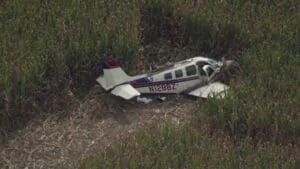 crews to a small plane crash in Walworth County on Sunday afternoon, then landed nearby to assist, according to firefighters at the scene. The plane was not associated with the skydiving company.
Four people were aboard the single-engine plane when it went down in a cornfield near Carver School and Lawlor roads, just south of East Troy Municipal Airport.at about 1:30 p.m.
Three occupants were taken to a nearby hospital for medical evaluation. The fourth was evaluated and released at the scene.
"A few members of our skydiving community who are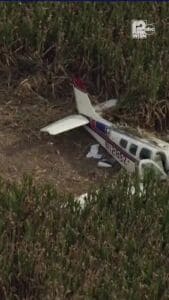 trained EMTs were already airborne in our jump plane and jumped out to assist at the scene, which was difficult to access from the road," Skydive Milwaukee said in a statement. "We’re grateful they were able to help when they were needed."
FlightAware data showed the plane took off from the East Troy airport, circled back and crashed south of the airport. Exclusive News Chopper 12 footage shows the aircraft in the field.
Federal Aviation Administration representatives arrived at the scene Sunday afternoon and met with local officials. Authorities restricted access to the crash site as the investigation began.
The cause of the crash was not immediately known.
https://www.wisn.com/article/small-plane-crashes-near-east-troy-airport/73916168
2 aboard plane that crashed at Buffalo Municipal Airport
By FOX 9 Staff
The Brief
-
- A plane carrying two people crashed Sunday afternoon at Buffalo Municipal Airport.
-
- The conditions of the two people aboard the plane have not yet been confirmed.
-
- The FAA and NTSB are both investigating the crash.
BUFFALO, Minn. (FOX 9) - The FAA says two people were aboard a plane that crashed while departing the Buffalo, Minn. airport Sunday afternoon.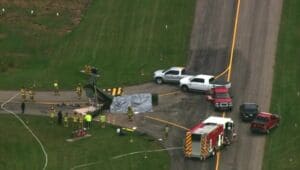
Aircraft incident at Buffalo Municipal Airport
What we know:
FAA officials say that, around 4:20 p.m. on Sunday, Sept. 27, a replica Piper PA18 crashed while departing from Buffalo Municipal Airport. The FAA tells FOX 9 that two people were on board the aircraft at the time.
Video from FOX 9's chopper shows the plane covered with a gray tarp overturned on a section of the runway.
What we don't know:
The FAA and the National Transportation Safety Board are both investigating the crash. The FAA says the NTSB is leading the investigation and will put out further updates.
Officials have not yet confirmed information about injuries to the people on board. FOX 9 has an inquiry out to the NTSB for more information.
https://www.fox9.com/news/2-aboard-plane-crashed-buffalo-municipal-airport
Pilot dead after plane crash
By Kyle Presley, Managing Editor
A man was found dead Saturday inside a small plane that crashed in a field off Brown Bridge Road in Murray County.
Sheriff Jimmy Davenport said deputies were dispatched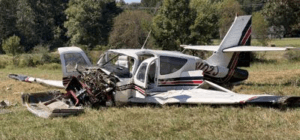 to the scene at 11:44 a.m. after the property owner’s brother-in-law discovered the wreckage while bush hogging a field. Authorities did not know exactly when the crash occurred but said it happened sometime Saturday.
The pilot, who authorities have identified as Dean Dale Worthingstun, 68, of Morganton was the only person aboard the craft and was flying from Athens, Tennessee.
Davenport said the plane was scheduled to land at Dalton Municipal Airport, where the pilot had rented a hangar.
The crash occurred approximately 1.5 miles from the airport.
“Once we were given all the clearance by the FAA and NTSB, we removed his body from the plane," Davenport told the Times.
Authorities said the cause of death had not been determined and the body would be taken to the state crime lab as part of standard procedure.
The Murray County Sheriff’s Office and Fire Department were securing the scene Saturday afternoon while awaiting their arrival. The National Transportation Safety Board were on-scene investigating the crash Sunday.
Davenport said the Federal Aviation Administration and NTSB are the lead investigating agencies.
“It’s absolutely tragic,” he said.
Helicopter crashes outside Montreal, killing all 4 occupants
Major crimes unit investigating crash
Annabelle Olivier · CBC News
Police are investigating after a helicopter crashed in a field near the Rang des Écossais off Highway 10 in the municipality of Sainte-Brigide-d'Iberville on Saturday afternoon.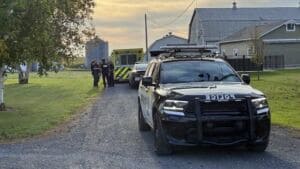
Sûreté du Québec spokesperson Brigitte Dorsainville said it happened at around 2:30 p.m. ET and the helicopter was on fire when first responders arrived.
Dorsainville said all four occupants on board were declared dead at the scene.
Sainte-Brigide-d'Iberville is located roughly 55 kilometres southeast of Montreal.
Police said Saturday evening that the helicopter likely encountered difficulties shortly after takeoff and crashed not far from its departure point, according to early information.
The SQ did not specify where the helicopter took off from.
According to Radio-Canada, the pilot was named Suzanne Jutras. She regularly offered helicopter tours.
She was experienced, said one of her friends, a fellow pilot. He spoke to Radio-Canada off camera.
The identities of the passenger have yet to be released.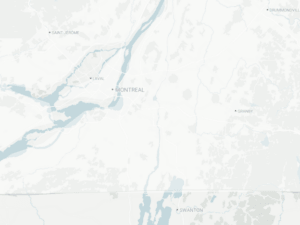 Police said they believe the helicopter was a "private aircraft."
The fire has since been brought under control and the SQ's major crimes unit has taken over the file.
Transport Canada to appoint minister's observer
The Transportation Safety Board of Canada confirmed it has deployed a team of investigators to the crash site in a statement to CBC News.
Federal Transport Minister Steven MacKinnon took to social media to express his condolences.
"My thoughts are with everyone affected by this tragedy," he wrote, adding that safety of civil aviation operations is a top priority for Transport Canada.
MacKinnon said the federal government is monitoring the situation and will provide necessary support. He also announced that Transport Canada will appoint a "minister's observer."
The observer's role is to monitor the response alongside the TSB and provide the minister with updates on the investigation. The observer can also help identify regulatory issues or safety deficiencies.
https://www.cbc.ca/news/canada/montreal/quebec-helicopter-crash-9.7359866
ASL aircraft runs off Mahdia runway; six aboard unhurt
By Staff Editor
An Air Services Limited (ASL) aircraft carrying five passengers and a pilot ran off the runway after landing at the Mahdia Airstrip yesterday. No injury was reported.
Police said the aircraft came to a halt on the eastern side of the airstrip. No cargo was reported lost or damaged, while the aircraft reportedly sustained minor damage to its wheels. Ranks visited the scene and took statements. Further enquiries are continuing.
While the police did not name ASL the photograph it issued with the release as running off the runway had ASL written on it. The company has not publicly spoken on the matter.
The incident comes ten days after a Trans Guyana Airways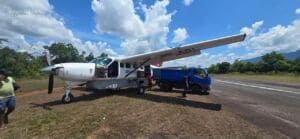 aircraft ran off the runway at Mabaruma. Trans Guyana said an animal entered the landing area and forced the aircraft off the runway, causing considerable damage. The circumstances of that incident remain under investigation.
Before the Mabaruma incident, Trans Guyana had written to the Guyana Civil Aviation Authority (GCAA) on June 16 about animals, people and other hazards at hinterland airstrips. It wrote again on September 9 about increased wildlife activity and bird strikes, identifying Mabaruma as the location of greatest concern. GCAA Director General Egbert Field subsequently confirmed receiving the airline’s complaints.
The Aviation Operators’ Association of Guyana has since called on the GCAA to ensure that aerodromes meet the required safety standards. It urged stronger runway inspections, perimeter security and wildlife control, warning that a pilot may have only seconds to respond to an obstruction during take-off or landing/
On Friday, the GCAA said it was alarmed by the increasing frequency of animals crossing runways and warned that allowing an animal onto aerodrome land is an offence under the Civil Aviation Act.
Emergency plane landing shuts down Causeway
Sékou Hendrickson
The Causeway was closed for about 30 minutes Friday after a private plane made an emergency landing in Bermuda.
The corporate aircraft, owned by Flexjet, a Gulfstream G650, registration FJ0646, was forced to land at LF Wade International Airport at about 11.47am when its cockpit became filled with smoke.
A Skyport spokeswoman confirmed the incident and explained the Causeway and Kindley Field Road closed temporarily in accordance with the company’s emergency protocols.
The aircraft was flying from West Palm Beach in Florida to Beja, Portugal when the incident occurred.
It carried six people at the time, four of whom were crew members.
The aircraft flew on to Ft Lauderdale, Florida on Saturday, at 8pm.
A Skyport spokeswoman said: “The Bermuda Fire and Rescue Service met the aircraft upon arrival and, following inspection, escorted it to apron four where the passengers subsequently deplaned.
“Further assessment is currently under way by the relevant agencies and arrangements have been made for the passengers to continue their travel on an alternate aircraft at a later time.”
Traffic access to the Causeway and Kindley Field Road reopened at about 12.20pm.
A police spokesman said: “Due to the circumstances, police officers carried out appropriate traffic management protocols, in the area surrounding the L.F. Wade International Airport Friday morning.
“As a result, some motorists were temporarily inconvenienced and the Bermuda Police Service thanks those persons for their patience and understanding.”
3 People Hospitalized After Delta Plane Makes Emergency Landing Due to Smoke in the Cabin
Eight other passengers were treated on the tarmac at the airport
Charlotte Phillipp
NEED TO KNOW
- A Delta flight from Barcelona to Boston was forced to make an emergency landing in Portugal due to smoke in the cabin
- Eight passengers were treated on the tarmac, and three others were hospitalized for further treatment
- Officials have not yet shared what caused the incident
A Delta flight from Barcelona to Boston made an emergency landing after smoke filled the cabin, requiring several passengers to be taken to the hospital.
Reuters reported that Delta flight DL251, which departed Barcelona at 3:15 p.m. local time on Sunday, Sept. 27, for Boston Logan International Airport, reported a mechanical issue about two and a half hours after takeoff.
The Airbus A330 plane quickly made an emergency landing in Porto, Portugal, the airline confirmed to Reuters.
The outlet reported that eight passengers who had been onboard the plane were treated on the tarmac at Francisco Sá Carneiro Airport in Porto.
A spokesperson for Portugal's emergency and civil protection authority confirmed to Reuters that three others were taken to hospital for treatment.
The agency also shared that the emergency landing occurred because of smoke in the cabin.
PEOPLE has reached out to Delta for further information.
Want to keep up with the latest crime coverage? Sign up for PEOPLE's free True Crime newsletter for breaking crime news, ongoing trial coverage and details of intriguing unsolved cases.
A similar incident recently took place on an Alaska Airlines flight bound for Hawaii.
During Alaska Airlines Flight 803, heading from Los Angeles to Honolulu on Thursday, Sept. 24, an unknown odor was reported during the flight and several people began feeling ill, the airline previously confirmed to PEOPLE.
Honolulu Emergency Medical Services (EMS) officials told local outlets Hawaii News Now, KHON2 News and the Honolulu Star-Advertiser that they and other emergency agencies responded to Terminal 1 at Daniel K. Inouye International Airport around 12:30 p.m.
After the plane landed, seven Hawaiian Airlines flight attendants were evaluated at the scene after reportedly experiencing symptoms including nausea and headaches.
https://www.yahoo.com/news/weather-news/articles/3-people-hospitalized-delta-plane-020115030.html
Small plane skids off runway at Albany Airport
by Matt Green
Albany, NY (WRGB) — A small single-engine propeller plane went off the runway at Albany Airport on Saturday morning.
According to a spokesperson from Albany Airport, the plane landed on Runway 28 shortly before 9:30 AM when the pilot lost control, went off the runway, and came to a stop in an area the airport calls a 'safety area.' There were two people on the plane at the time, including the pilot and a passenger. No injuries were reported.
The airport says that while the exact cause of the crash is unknown, it's being investigated as a potential nose gear collapse.
The plane was towed to the T-hangars, and the runway reopened just before 11:15 AM after crews cleaned up debris.
The airport says no commercial flights were impacted, since those flights were utilizing Runways 1 & 19.
https://cbs6albany.com/news/local/small-plane-skids-off-runway-at-albany-airport
Lufthansa flight diverted to Lyon after powerbank catches fire
DPA
A Lufthansa passenger plane flying from Frankfurt to Lisbon was diverted to the French city of Lyon after a passenger's powerbank caught fire on board, the airline told dpa on Sunday.
The aircraft landed safely in Lyon at around 10 pm (2000 GMT) on Saturday evening, the German flag carrier said.
It said the crew on flight number LH1170 had previously secured the powerbank in a designated lithium safe bag.
The 198 passengers and six crew members were put up in hotels for the night and rebooked onto alternative connections to Lisbon the following day.
It was the second incident over the weekend involving a Lufthansa aircraft departing from Frankfurt. Also on Saturday, a Lufthansa flight from Frankfurt to Toronto with 371 passengers on board turned back over Scotland for safety reasons and landed in Manchester due to a smell in the cabin, the airline said.
Many travellers carry powerbanks to charge their smartphones when no power socket is available. However, using powerbanks has been banned on Lufthansa Group flights since the start of the year, with an exception for the use of approved medical devices.
For safety reasons, powerbanks - like e-cigarettes - may not be carried in checked baggage on Lufthansa and many other airlines. On Lufthansa Group flights, they may not be stored in overhead compartments, but only in the seat pocket of the seat in front, on the passenger's person or in hand luggage stored under the seat.
https://www.yahoo.com/news/world/articles/lufthansa-flight-diverted-lyon-powerbank-181829682.html
NTSB Prelim: Consolidated Aeronautics Inc. Lake LA-4-200
The Flight Track Data Was Consistent With The Airplane Performing Low Approaches Or Landings At Multiple Lakes During The Flight
Location: Ithaca, NY Accident Number: ERA26FA317
Date & Time: August 30, 2026, 12:50 Local Registration: N6185V
Aircraft: Consolidated Aeronautics Inc. Lake LA-4-200 Injuries: 2 Fatal
Flight Conducted Under: Part 91: General aviation - Personal
On August 30, 2026, about 1250 eastern daylight time, a Consolidated Aeronautics Inc., Lake LA-4-200, N6185V, was substantially damaged when it was involved in an accident near Ithaca, New York. The pilot and passenger were fatally injured. The airplane was operated as a Title 14 Code of Federal Regulations Part 91 personal flight.
According to preliminary ADS-B data received from the FAA, the airplane departed Ithaca Tompkins International Airport (ITH), Ithaca, New York about 1156. The flight track data was consistent with the airplane performing low approaches or landings at multiple lakes during the flight. According to FAA air traffic control audio recordings provided by the FAA, the pilot contacted ITH air traffic control tower, and reported that he was 8 miles west of the airport.
The pilot was instructed by the controller to report when the airplane was 4 miles from the airport. At 1233:01 the final segment of the flight track showed the airplane began a gradual descent from 2,300 ft mean sea level (msl) at 113 knots ground speed. At 1233:30 the airplane continued its descent through 2,200 feet msl and began a 180º right turn and had decelerated to 87 knots ground speed. At 1234:18 the airplane continued descending through 1,500 ft msl and stabilized at 61 knots ground speed. At 1234:25 the last track data point showed the airplane on a westerly ground track, at 1,401 ft msl (about 300 ft above the elevation of ITH), and 61 knots ground speed.
The wreckage was located in a wooded, rural area at the end of a gravel driveway. The airplane came to rest in a nose-down attitude, and all major components of the airplane were accounted for at the accident site. The final approach heading was about 262º magnetic. Broken branches were observed in a tree that was about 40 ft high and 120 ft before the initial ground impact point.
The airplane fuselage was a hull-type designed for water landings. The nose of the airplane was substantially damaged, with aft crushing and crumpling. The empennage remained attached to the fuselage and sustained no damage. The engine was mounted above the fuselage on a structural pylon located aft of the cabin and between the wings and drove a twoblade pusher propeller. The forward engine cowlings were impact-fractured and cracked.
The outboard section of the right wing was impact fractured and crushed along the leading edge and contained embedded vegetation. The left wing exhibited aft crushing along the leading edge, buckling at the midpoint, and was torn at the rivet line above the left-wing float. The instrument panel was fragmented. Flight control continuity was established from the flight control surfaces through impact-fractured control tubes and cables to the cockpit area. The fuel valve was positioned to ON, and fuel line continuity was established from the main fuel tank to the engine.
The airplane fuel system consisted of a bladder-type 40-gallon main tank under the pylon and two 7-gallon auxiliary tanks located in each of the wing floats. The tanks were intact with no evidence of breaching. No fuel was present in the main tank or auxiliary tanks. The finger screen was observed at the bottom of the main tank, was clear of debris, and was unobstructed.
The three electrically-operated boost pumps were tested with a 12-volt power source and operated normally. The fuel lines were tested for restriction by blowing air through them from the main tank to the engine they were found to be unobstructed. After wing removal, the auxiliary fuel lines from the wing float tanks to the fuselage were tested for restriction by blowing air through them and they were found to be unobstructed; however, the auxiliary fuel lines could not be tested from the fuselage to the main tank Mechanical continuity of the engine was established by rotating the propeller by hand. Thumb compression and suction were confirmed on all cylinders during post-accident examination of the engine. The engine was equipped with two standard magnetos that remained secured in their housing and both produced spark on all the leads when tested. Oil was present in the oil sump, and no contamination or metal particles were present inside the oil filter. Trace amounts of fuel were observed within the engine-driven fuel pump and fuel servo inlet line. No fuel was observed in the flow divider. All of the fuel injection nozzle lines were secure and the injection nozzle lines and nozzles were unobstructed.
The wreckage was recovered and retained for further examination.
FMI: www.ntsb.gov
NTSB Prelim: Para-Ski VX
Aircraft Impacted Terrain, Collided With A Barbed Wire Fence, And Came To Rest On Its Side With Substantial Damage To The Fuselage
Location: Westport, SD Accident Number: CEN26LA296
Date & Time: August 19, 2026, 19:20 Local Registration: C-IFBY
Aircraft: Para-Ski VX Injuries: 1 Fatal, 1 Serious, 1 Minor
Flight Conducted Under: Part 91: General aviation - Personal
On August 19, 2026, about 1920 central daylight time, a Para-Ski VX powered parachute, CIFBY, was substantially damaged when it was involved in an accident near Westport, South Dakota. The pilot sustained serious injuries, passenger 1 sustained fatal injuries, and passenger 2 sustained minor injuries. The powered parachute was operated as a Title 14 Code of Federal Regulations Part 91 personal flight.
A witness reported that they observed the accident aircraft depart from a field towards the west. The witness looked away for about one minute, and when the witness looked back the aircraft had already impacted terrain. The aircraft impacted terrain, collided with a barbed wire fence, and came to rest on its side with substantial damage to the fuselage.
Initial reports revealed that the pilot was seated in the front seat with passenger 1 seated in his lap and passenger 2 was seated in the rear seat. The accident aircraft does not meet the requirements as outlined in Title 14 Code of Federal Regulations Part 103 to be considered an ultralight vehicle. The aircraft fuel capacity exceeded 5 gallons and is configured for operation for more than a single occupant. The pilot holds an FAA remote pilot certificate for small unmanned aircraft systems.
The powered parachute was retained for further examination.
FMI: www.ntsb.gov
NTSB Final Report: Cirrus Design Corp SF50
The Airplane “Lurched Hard” When It Impacted The Snowbank Along The Left Side Of The Runway
Location: Spearfish, South Dakota Accident Number: CEN25LA069
Date & Time: January 3, 2025, 23:38 Local Registration: N603AP
Aircraft: Cirrus Design Corp SF50 Aircraft Damage: Substantial
Defining Event: Abnormal runway contact Injuries: 6 None
Flight Conducted Under: Part 91: General aviation - Personal
Analysis: The pilot reported the flight proceeded uneventfully until landing. The air traffic controller advised that the runway was covered with 1/8” of wet snow and braking action was reported as good. The pilot noted the airport was in sight about 4 miles out, and he executed a straightin approach to runway 13. He verified that the landing gear was down. His intention was to touchdown at the landing reference speed (Vref) to minimize the need for braking. The airplane was lined up with the extended runway centerline and the pilot disconnected the autopilot about 2 miles from the runway.
The pilot recalled that during landing, about 8 to 10 feet above ground level (agl), he received an aerodynamic stall warning with the stick shaker. At first, the touchdown seemed normal, but then the airplane started to drift to the left. The pilot’s efforts to maintain directional control were not successful. The airplane “lurched hard” when it impacted the snowbank along the left side of the runway. When the airplane came to rest, the pilot shut down the engine, and the airplane was evacuated.
One of the passengers confirmed 3-green landing gear down lights while on approach. The airplane appeared to be slightly left of the runway centerline and quickly drifted to the left after it touched down. When left wing caught the snowbank the airplane departed the left side of the runway. The wind was almost calm when the passenger exited the airplane. Another passenger estimated about 2 to 3 inches of snow was covering the runway when they evacuated the airplane.
An examination of the accident site revealed runway wheel marks (compressed snow) corresponding to the airplane beginning about 150 ft before the touchdown zone (1,000-ft) markers. At touchdown, the left main wheel was 6 to 8 ft from the left side of the runway (about 30 ft left of centerline), and the airplane appeared to depart the left side of the runway about 140 ft after the beginning of the wheel tracks. The snowbanks on each side of the runway were 2 to 3 ft high.
Onboard data indicated that the airplane crossed the runway arrival threshold at 92 KIAS. The airplane touched down about 5 seconds later at 85 KIAS. It subsequently departed the left side of the runway and came to rest about 1,400 ft from the threshold. The data did not record any activation of the stall warning system.
Postaccident examination revealed damage to the outboard right wing. The left main landing gear remained extended; however, the right main landing gear was retracted in the wheel well. Further examination revealed the right main landing gear actuator housing was fractured along the length of the housing. The fracture surface exhibited features consistent with an overstress failure. Additionally, the housing was deformed outward at the fracture consistent with an overpressure event.
It is likely that the right main landing gear down lock was moved to the unlocked position when the airplane encountered the snowbank during the runway excursion. Without the down lock engaged, sideloading of the landing gear resulted in excessive hydraulic pressure within the actuator, an overstress fracture, and outward deformation of the housing. Once the hydraulic pressure was relieved due to the actuator failure the right main landing gear collapsed. The right tire likely went flat during this time. The airplane flight manual specified approach speeds of 91 KIAS and 96 KIAS with 50% flaps and operating weights of 5,000 lbs. and 5,550 lbs., respectively. Aerodynamic stall speeds with 50% flaps and 0° angle of bank were noted at 72 KIAS and 74 KIAS at operating weights of 5,200 lbs. and 5,550 lbs., respectively.
The available information revealed that the landing approach was performed at an appropriate airspeed and the airplane touched down under control. However, it touched down left of the runway centerline due to the snow-covered runway and night lighting conditions. Once the left wing and left main landing gear struck the snow bank bordering the runway, the pilot was unable to maintain directional control and the airplane departed the runway. The data did not indicate any mechanical failures or malfunctions with respect to the airplane that would have precluded normal operations.
Probable Cause and Findings: The National Transportation Safety Board determines the probable cause(s) of this accident to be -- The pilot’s failure to land on the centerline of the snow-covered runway at night, which resulted in the left wing impacting a snowbank, a subsequent loss of directional control, and runway excursion.
FMI: www.ntsb.gov

Today in History
34 Years ago today: On 28 September 1992 PIA Flight 268, an Airbus A300B4, impacted a moutainside while on approach to Kathmandu-Tribhuvan Airport, Nepal , killing all 167 occupants.
| Date: | Monday 28 September 1992 |
| Time: | 14:30 |
| Type: | Airbus A300B4-203 |
| Owner/operator: | Pakistan International Airlines - PIA |
| Registration: | AP-BCP |
| MSN: | 025 |
| Year of manufacture: | 1976 |
| Total airframe hrs: | 39045 hours |
| Cycles: | 19172 flights |
| Engine model: | General Electric CF6-50C2 |
| Fatalities: | Fatalities: 167 / Occupants: 167 |
| Other fatalities: | 0 |
| Aircraft damage: | Destroyed, written off |
| Category: | Accident |
| Location: | 18 km S of Kathmandu-Tribhuvan Airport (KTM) - Nepal |
| Phase: | Approach |
| Nature: | Passenger - Scheduled |
| Departure airport: | Karachi International Airport (KHI/OPKC) |
| Destination airport: | Kathmandu-Tribhuvan Airport (KTM/VNKT) |
| Confidence Rating: | Accident investigation report completed and information captured |
Narrative:
PIA Flight 268, an Airbus A300B4, impacted a moutainside while on approach to Kathmandu-Tribhuvan Airport, Nepal , killing all 167 occupants.
Flight PK268 departed Karachi, Pakistan at 11:13 for a scheduled passenger flight to Kathmandu, Nepal. The en route portion of the flight was uneventful and the aircraft was cleared for a Sierra approach to Kathmandu's runway 02. The flight was instructed to maintain 11500 feet and report at 16 DME (16 miles from the VOR/DME beacon, which is located 0,6 nm short of the runway). The Kathmandu approach is very difficult, since the airport is located in an oval-shaped valley surrounded by mountains as high as 9665 feet. Runway elevation is 4313 feet amsl. The next approach fixes for PK268 were at 13 DME (at 10500 feet), 10 DME (at 9500 feet) and 8 DME (at 8200 feet). A few seconds after reporting 10 DME, the aircraft descended through 8200 feet, which was the altitude for 8 DME. The Airbus impacted a steep cloud-covered hillside at approx. 7300 feet amsl at 9,16 DME.
Cause:
"The balance of evidence suggests that the primary cause of the accident was that one or both pilots consistently failed to follow the approach procedure and inadvertently adopted a profile which, at each DME fix, was one altitude step ahead and below the correct procedure. Why and how that happened could not be determined with certainty because there was no record of the crew's conversation on the flight deck.
Contributory causal factors were thought to be the inevitable complexity of the approach and the associated approach chart."
