First off, Happy Festivus to you all!
Down to the last couple of days now, no chance of getting anything delivered in time so you're going to have to get out there and do it the old fashioned way, some face to face shopping!
Here are your stories for today, and let the airing of grievances begin....
Be safe out there!
Tom
-
Mexican Navy plane crash near Texas' Galveston kills at least 5, including a 2-year-old
Mexican Navy plane, Beechcraft King Air 350i, transporting a young medical patient and seven others crashed Monday near Galveston, killing at least five people and setting off a search in the waters off the Texas coast, officials said.
Livemint
A Mexican Navy aircraft on a medical mission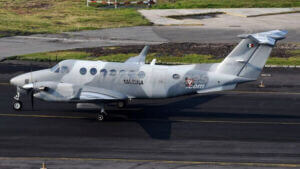 crashed into the waters of Galveston Bay on Monday afternoon, killing at least five people — including a two-year-old child — and triggering a major search-and-rescue operation along the Texas coast, US and Mexican authorities said.
The aircraft, a Beechcraft King Air 350i operated by the Mexican Navy, was transporting a young medical patient and seven others when it went down near Galveston, about 50 miles (80.5 kilometres) southeast of Houston.
What happened near Galveston Bay?
The Mexican Navy plane crash occurred on Monday afternoon near the base of a causeway along the Texas coast, close to Scholes International Airport. The US Coast Guard confirmed that the aircraft crashed into Galveston Bay, setting off an immediate response from federal, state and local agencies.
Coast Guard officials said at least five people were killed in the crash, while four others were rescued alive from the water.
Search and rescue teams continue to work in the area as investigators assess the wreckage.
Who were the passengers on board?
Authorities said the aircraft was conducting a medical transport mission.
“The plane had been transporting burn patients,” Galveston County Sheriff Jimmy Fullen said.
Two of the passengers on Mexican Navy plane were members of the Michou and Mau Foundation, a nonprofit organisation that provides aid to Mexican children who have suffered severe burns.
A two-year-old child was among those who died in the crash, according to Coast Guard officials.
What do flight records show?
According to flight tracking website FlightRadar, the plane departed from Mérida in Mexico’s Yucatán state at 18:46 GMT and was last recorded at 21:01 GMT over Galveston Bay, near Scholes International Airport.
The Mexican Navy said it is coordinating with the Mexican Consulate in Houston to support the response and assist families affected by the crash.
How many people were rescued?
Search and rescue operations led by the Coast Guard recovered four people alive, a spokesperson for the Coast Guard’s Houston–Galveston sector told CNN.
Emergency responders from multiple agencies, including the Galveston County Sheriff’s Office, were deployed to the scene.
“The incident remains under investigation, and additional information will be released as it becomes available,” the sheriff’s office said in a post on Facebook, adding that the public should avoid the area so emergency responders can work safely.
Is the cause of the crash known?
The cause of the crash remains under investigation.
Mexico’s Navy said in a statement that the aircraft was supporting a medical mission and had suffered an “accident”, adding that it would investigate what led to the crash.
Teams from the Federal Aviation Administration and the National Transportation Safety Board have arrived at the site, according to the Texas Department of Public Safety.
Did weather play a role?
It is not yet clear whether weather conditions contributed to the crash. However, the Galveston area has experienced persistent fog in recent days.
Cameron Batiste, a meteorologist with the National Weather Service, said fog moved into the area around 2:30 p.m. on Monday, reducing visibility to about half a mile.
The foggy conditions are expected to persist through Tuesday morning, he said.
Why the incident has drawn wider attention
Galveston, a popular beach destination, rarely sees aviation accidents of this scale involving international military aircraft. The involvement of a medical mission — and the deaths of both adults and a young child — has added to the gravity of the incident.
https://www.livemint.com/news/us-news/mexican-navy-plane-crash-near-galveston-texas-kills-at-least-five-including-a-2yearold-11766454561901.html
Private plane crashes in Chaves County
By KOB
ROSWELL, N.M. – A private plane crash-landed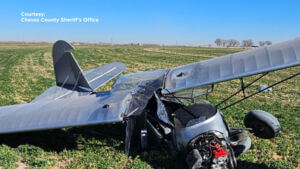 Monday in a field near Hagerman, with the pilot hospitalized for injuries.
Chaves County Sheriff’s deputies responded to the scene, confirming the pilot was the only person on board. The National Transportation Safety Board (NTSB) and New Mexico State Police are investigating the incident.
Further details on the pilot’s condition or the cause of the crash have not been released.
https://www.kob.com/new-mexico/private-plane-crashes-in-chaves-county/
NTSB Final Report: Cessna 170
During The Landing Roll, The Airplane Lifted Off But Then Descended Back To The Runway And Veered To The Left
Location: Fitchburg, Massachusetts Accident Number: ERA25LA312
Date & Time: August 23, 2025, 10:00 Local Registration: N2589V
Aircraft: Cessna 170 Aircraft Damage: Substantial
Defining Event: Loss of control on ground Injuries: 1 None
Flight Conducted Under: Part 91: General aviation - Personal
Analysis: The pilot of the tailwheel-equipped airplane was approaching his destination airport for landing. During the landing roll, the airplane lifted off but then descended back to the runway and veered to the left. The pilot attempted to correct with opposite rudder, but the airplane then ground looped to the left and exited the left side of the runway. The airplane subsequently nosed over, which resulted in substantial damage to the rudder, aft fuselage, and right-wing lift strut. The pilot reported that there were no preaccident mechanical failures or malfunctions with the airplane that would have precluded normal operation. At the time of the accident, the pilot was landing on runway 32 and the report wind was from 210° at 8 knots, which would have resulted in the left quartering tailwind.
Probable Cause and Findings: The National Transportation Safety Board determines the probable cause(s) of this accident to be -- The pilot’s failure to maintain directional control during the landing roll with a quartering tailwind.
FMI: www.ntsb.gov
Today in History
53 Years ago today: On 23 December 1972 Braathens SAFE flight 239, a Fokker F-28 Fellowship, crashed while on approach to Oslo-Fornebu Airport, Norway, killing 40 occupants; 5 survived the accident.
| Date: | Saturday 23 December 1972 |
| Time: | 16:34 |
| Type: | Fokker F-28 Fellowship 1000 |
| Owner/operator: | Braathens SAFE |
| Registration: | LN-SUY |
| MSN: | 11011 |
| Year of manufacture: | 1969 |
| Total airframe hrs: | 8228 hours |
| Cycles: | 16710 flights |
| Engine model: | Rolls-Royce Spey 555-15 |
| Fatalities: | Fatalities: 40 / Occupants: 45 |
| Other fatalities: | 0 |
| Aircraft damage: | Destroyed, written off |
| Category: | Accident |
| Location: | 16 km W of Oslo-Fornebu Airport (FBU) - Norway |
| Phase: | Approach |
| Nature: | Passenger - Scheduled |
| Departure airport: | Ã…lesund-Vigra Airport (AES/ENAL) |
| Destination airport: | Oslo-Fornebu Airport (FBU/ENFB) |
| Investigating agency: | Flyhavarikommisjon |
| Confidence Rating: | Accident investigation report completed and information captured |
Narrative:
Braathens SAFE flight 239, a Fokker F-28 Fellowship, crashed while on approach to Oslo-Fornebu Airport, Norway, killing 40 occupants; 5 survived the accident.
Braathens flight 239 turned some 10 NM ahead of the ILS-procedure for runway 06 at Oslo-Fornebu Airport while the captain was having private communications regarding Christmas with the ACC-controller. The F-28 also descended below MSA and the crew lowered the gear and flaps as it was established on the ILS. It then flew into the woods more than 4 NM off course in darkness and fog.
Accident cause (translated from Norwegian):
The probable cause of the aircraft LN-SUY that crashed near Asdoltjern in Asker on 23 December 1972 at 1634:55 was incorrect navigation under a truncated instrument approach to runway 06 at Fornebu.
The fact, which could not to specifed more closely, however, must have been committed when the aircraft left 3500 feet but was not fatal for the last 13 seconds when it was flown 1510 feet below the glide path down while aboard it must have been clear that neither was at or within 2 1/2° from the ILS facility centerline.
Contributing factors:
a) The aircraft's ADF no. 2 was probably tuned to 100 kHz erroneously.
b) Fornebu ILS to runway 06 provides useable glideslope signals from Sylling to the accident site.
c) Outer Marker on Steilene can provide convincing signals for passage of an outer Marker Beacon in apparently correct glidepath altitude between Sylling and the accident site in the F-28 aircraft if "merkefyrbryteren" are put in setting HIGH.
Unfortunate circumstances:
a) The commander was not as rested as he could have been according to regulations
b) The commander made radio calls with air traffic controller in the control tower that were not allowed during the initial phase of the approach.
c) Control tower bearing indicator was moved from its fixed position in the control desk, so that the possibility of random directional control was reduced.
d) Training Position for approach control at Oslo ATCC was unmanned.
